
When your babe transition from the adorable lump phase to living, breathing, talking toddler, life ramps up a notch (as does the chatter). So finding quiet time, to drink that infamous cup of tea while it’s still hot, or, you know, go to the toilet alone, becomes harder and harder. And while you may have heard about independent play, for many of us it feels like a golden unicorn – a great big myth that you’re not even sure actually exists. Well the good news is: it does — and it’s a learned skill. We spoke to Dr Kimberly O'Brien, educational and developmental psychologist at Quirky Kid to find out how we can encourage independent play, and make it a reality.
What is independent play?
If this language is new to you, here’s what it’s all about: Independent play is when a child is playing alone, with friends or with siblings. The problem is, when we hear “independent play” we think that it means hours of uninterrupted free time, but in reality it’s only minutes — especially at first. The good news is, the more we help them practise this skill, the longer they’ll start to enjoy it. It’s an important skill to learn for life because it helps to increase things like creativity and concentration, focus, patience, problem solving and even self-regulation.
Is play different for girls than for boys?
You may have heard boy mums (including me!) swear that boys are worse at independent play than girls, but Dr. O’Brien says that there is no evidence to support that it’s gender related. “Boys are equally good at independent play, it's really a sign of maturity when kids can play independently,” she says.
At what age does independent play happen?
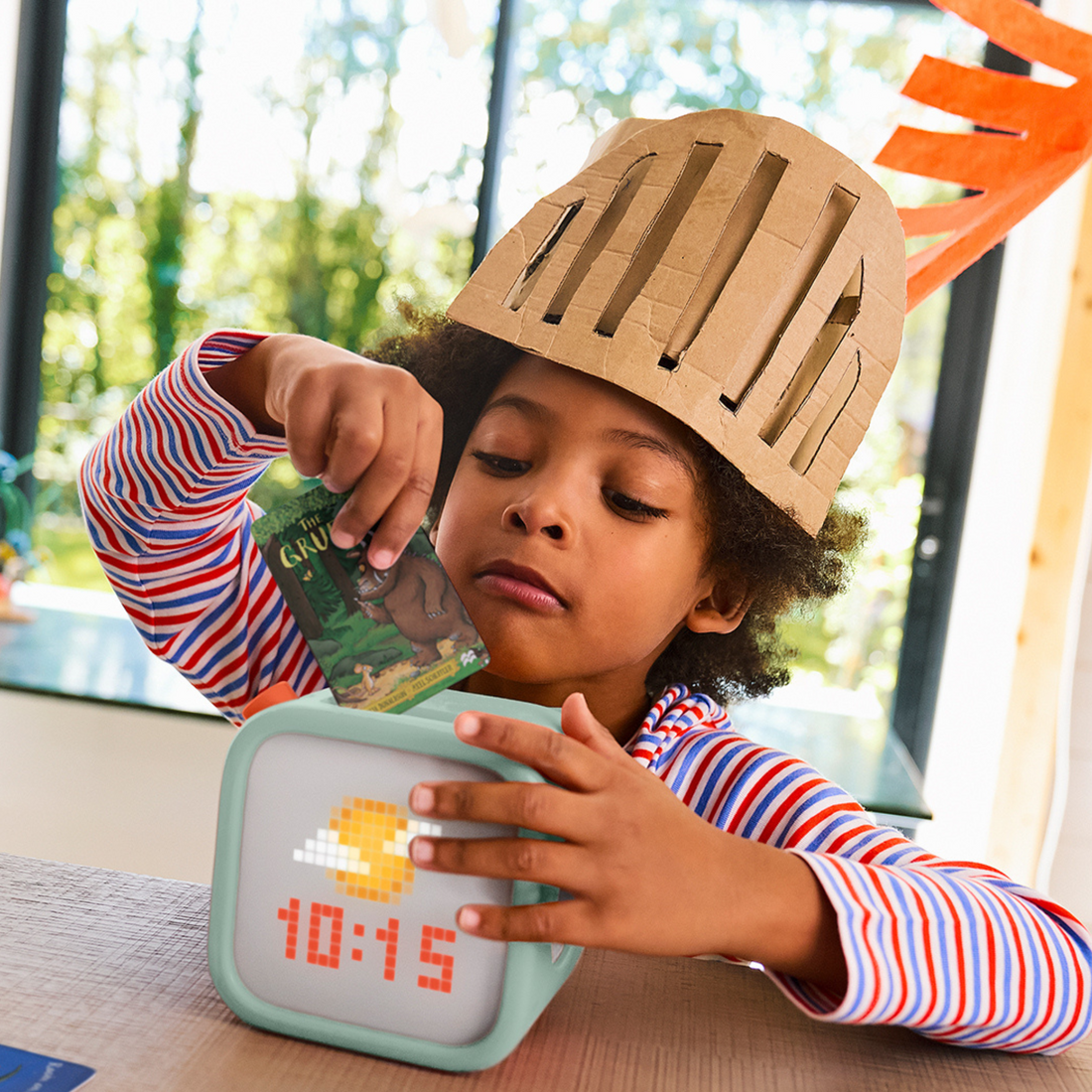
Every child is different, but from around two, kids will be starting to do things like stacking blocks, completing puzzles, showing interest playing beside other children (called “cooperative play”) and learning how to take turns. Imaginary play, generally follows on from this, somewhere between 2-3. "Usually they're following their parent around watching them do things so you might find that they start to do imaginary play from this, like pretending to wash their toy baby in the bath”. But remember, this imaginary play will likely be only up to 10 minutes at this age (two), so while you might be able to drink that hot tea, you probably won't be able to binge watch a Netflix series. “When the child starts to show interest in independent play, that's a good sign you don't have to be with them all the time, but of course, you still need to supervise and support from a distance (say, five metres) so you can still hear and praise them,” says Dr. O’Brien.
Related Products


Toniebox 2 Starter Set - Moon Grey
A screen-free audio player made for little listeners.

Tonie Audio Character - Emma Memma
A Tonie of Emma Memma songs to get kids moving and singing.

Reversible Kitchen Laundry
A two-in-one wooden kitchen and laundry set for realistic role play.

Explore & More Follow Bee Crawl Toy
A tummy time development toy to encourage your baby to crawl.

Fire Engine
A wooden fire engine with crew and ladder, made for heroic play.

Tonie Audio Character - Cars - Lightning McQueen
A fast-paced audio adventure with Lightning McQueen and friends.

Cocoon Stacking Sensory Snail
A sensory stacking snail with textured pieces for tactile discovery.7 Tips For Fostering Independent Play
You know they’re capable of it, you know it’s good for them, but how do you actually get them to do it?
1. Encourage: When they are playing independently, praise them! “Saying something like ‘ wow you're doing such a great job I'll come back and check on you soon’ so that they feel proud of their independent play really helps” says Dr. O’Brien.
2. Show: As parents, we’re all modelling the behaviour we want for our children, and this is no different. It might mean sitting with them and helping them start a task and then being in the same room as them, but doing a different task, so you’re near but not playing.
3. Go Beyond Their Bedroom: Rather than just focussing on play in their room, incorporate some of the ideas in your daily life. Dr. O’Brien gives the example of stacking blocks: if this is something they enjoy you can get them to help stack tupperware or laundry. “Children really do thrive with responsibility so it doesn’t have to be ‘play’ all day, you can give them a role or responsibility and check in on them to see how they’re doing.” she says. This is a great way to start weaning them of side-by-side play, just being in the background while they do their thing.
4. Give Options: Toddlers will rarely go searching for something that’s packed away: they play with what’s in front of them. So set the room up with some options that they can visually see and access easily.
5. Avoid Overwhelm: Dr. O’Brien suggests having around five toys or activities set up, but no more. Too much choice can be overwhelming.
6. Find Their Niche: Independent play is going to be much more successful if the child has a genuine interest in an activity whether that’s drawing, building, physical play, craft or imaginary pla, so set up the room according to their interests.
7. Let Them Lead: Dr. O’Brien says that one of the biggest mistakes parents make is trying to lead the play too much - because there’s no right way to play. “It’s important to really just encourage creativity so if they decide to do something different with the blocks or equipment or whatever just let them do that, don't “show” them how to do it the “right” way or tell them they're doing it wrong just let them know surprise you with their ideas.”