
While baby wearing has been happening for millennia, and carriers have been on the market since the 1930s (booming in the 60s), baby wearing safety is still a fairly new conversation — one you don’t usually have until you’re a new parent, already overwhelmed by the steep parenting learning curve, trying to strap your newborn into a carrier (that you just pulled out of the box). If this is where you’re at, right now, or you’ve learnt from others and are getting wise before you get to this point, we have what you need. Here, Lauren Modi, babywearing expert and co-founder of Mumma Etc. shares the baby wearing must-knows for safe, comfortable, happy babywearing.
Most common mistakes we make when babywearing
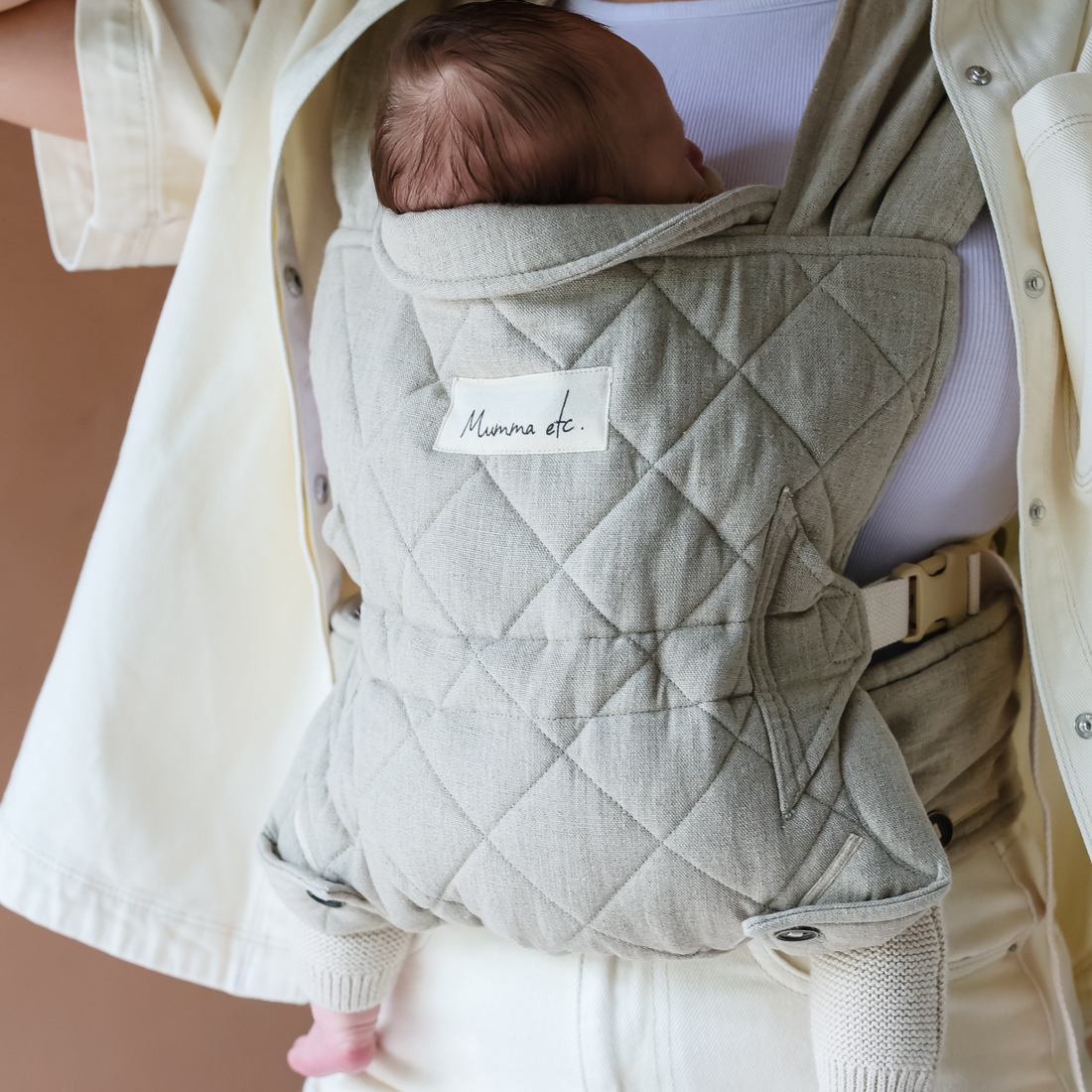
- Covering the baby’s face: A newborn’s face should never be hidden under the carrier, a hood, or a blanket. Their ears should be visible above the carrier so their airway is clear and to allow air circulation so they don’t overheat. Try positioning the belt higher on your waist (just under the bust) and make sure the headrest is set correctly for a newborn.
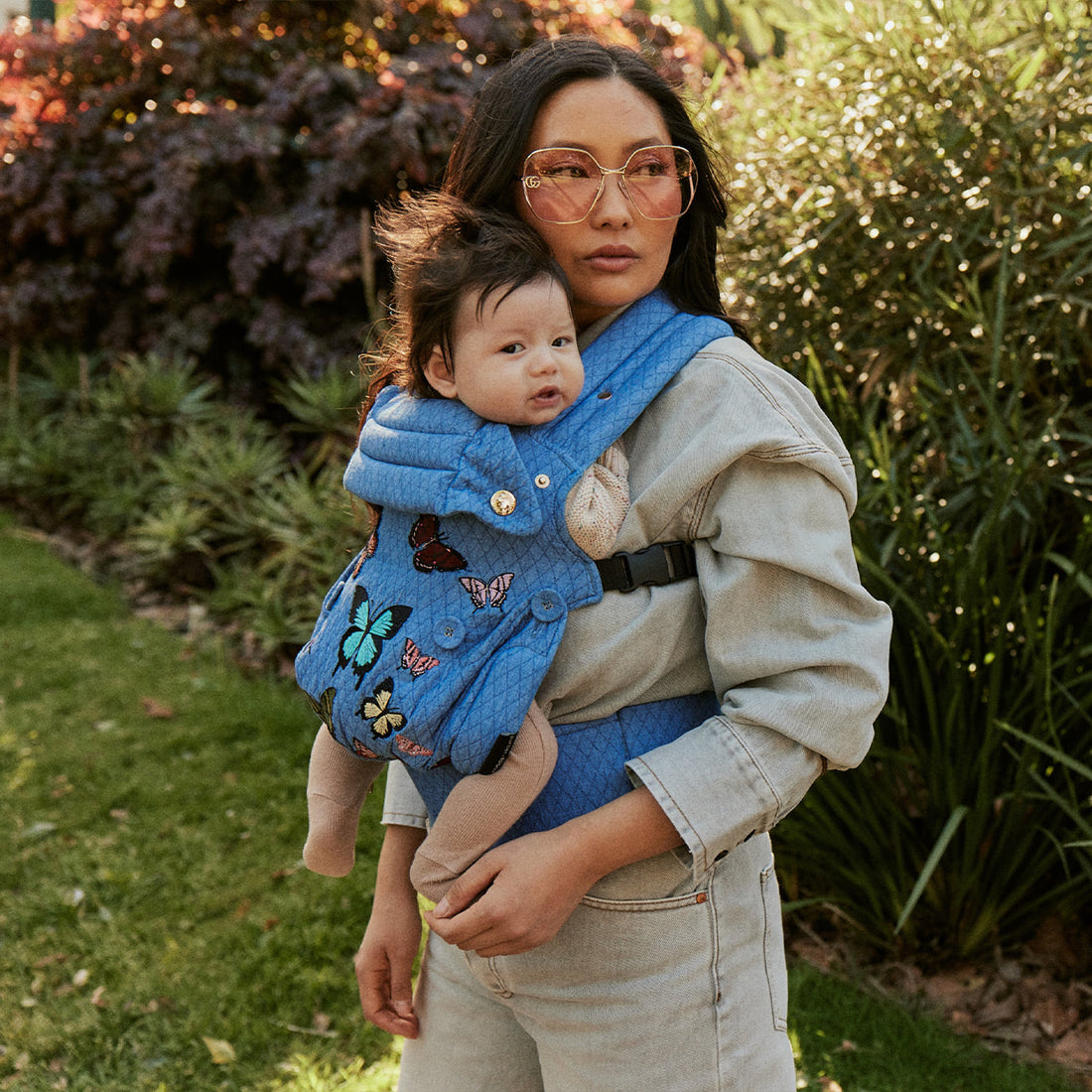
- Wearing too low: If babywearing hurts your back, it’s usually because your carrier is sitting too low. Your baby should be “close enough to kiss”. This not only makes monitoring easier but also keeps both you and your baby better supported. A low, loose carry can cause your baby to slouch and this can obstruct their airways.
- Incorrect base adjustment: The seat should support your baby’s thighs all the way to the knees in the "M" position. Adjust the base as they grow. Even older babies benefit from proper ergonomic support.
Correctly sharing your carrier between mum, dad, grandma, auntie, etc.
Most clip carriers are designed to adjust easily between different wearers. Always loosen the waist and shoulder straps before putting it on a new wearer, so you can fit it more easily to your body. Some carriers even have markers on the straps so you can remember your settings. If you’re using a wrap, sizing can vary. If you’re sharing with someone larger, it’s best to size up so there’s plenty of fabric for both of you. It’s always better to have too much length than not enough.
What are the signs your baby is ready for face-out wearing?
Some brands recommend face-out wearing from around 4 months, but milestones are more important than age in this case. Your baby should have strong head and neck control, be able to sit in a tripod position (sitting upright, using their hands to balance), show signs of core strength. Outward-facing should only be used for short periods of approximately 15–20 minutes. Never let your baby sleep in this position, as their chin can fall to their chest and obstruct their airway. Watch for signs of overstimulation and turn them inward if they seem tired or unsettled. That said, once they’re ready, many babies absolutely love facing the world and it can be such a fun stage for both of you.
What should you do if your baby seems to not enjoy the carrier?
Try putting your baby in the carrier when they’re fed, rested, and happy, as this helps build a positive association. If they fuss, movement usually helps. Try walking, swaying, or getting on with your day, which can remind them of being in the womb and soothe them. Breastfed babies sometimes fuss because they can smell milk but can’t access it. Learning to feed in the carrier can help in these situations. If they still seem unhappy, double-check their positioning and fit. Discomfort often comes from an adjustment issue. If you’re unsure, reach out to your carrier brand, a babywearing educator, or a local mum’s community group for a fit check.
What should you do if your carrier feels uncomfortable or pulls on a certain body part e.g. shoulders, back etc.?
Start by reviewing your fit by firstly going back through your brand’s demo videos and instruction booklet . If it’s an option offered by your brand, book a one-on-one fit check. Often, small adjustments such as tightening the waistband, lifting the carrier higher, or repositioning the straps can make a big difference. If discomfort persists, it may simply be that the carrier isn’t the best match for your body type. Not every carrier works for everyone, so it’s worth trying different styles until you find the right fit.