
What about other skincare actives?
Good question. As other active ingredients like salicylic acid, glycolic acid, and Vitamin C are usually present in low enough doses in mainstream skincare to remain risk-free during your pregnancy, you do need to factor in the changes to your skin too.
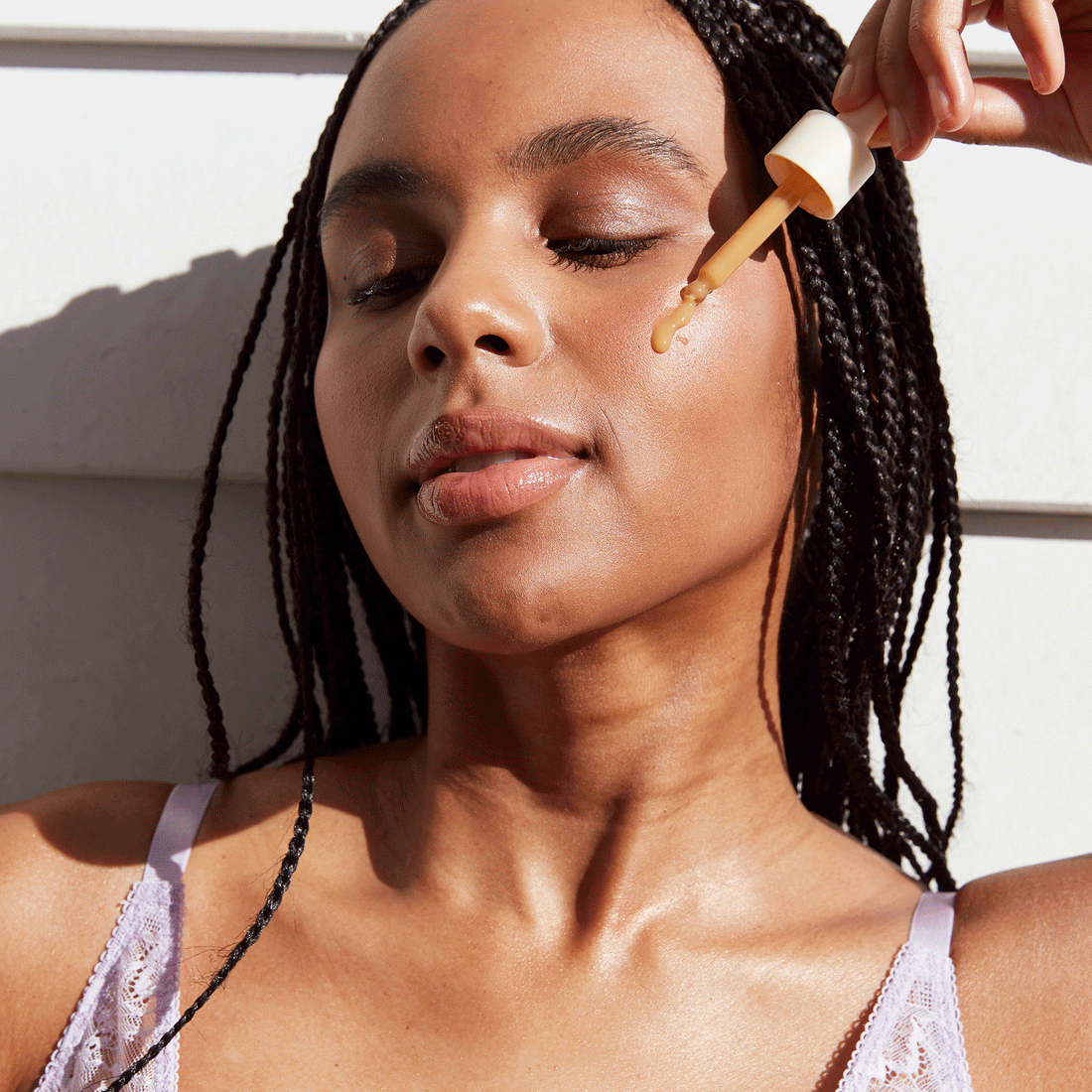
Pregnancy hormones can completely change your skin and what irritates it. For this reason, you may want to pull back on your more active serums and treatments or alternate them with gentler formulas until you have a chance to see how your skin is reacting to your pregnancy.
Leigh Campbell, Beauty Expert and Co-Founder of Brillo Beauty seconds this, so recommends focusing on supporting your skin. "Take it back to hydration. Remove your actives. I had a safe vitamin A that I tried using during pregnancy, but my skin was just way too sensitive so I took out all the actives and I was just all about hydration and SPF."
“I would probably stay away from strong actives like glycolic acid, salicylic and sometimes vitamin C can be a little reactive too,” says Bonasera. “It really depends on the individual person because pregnancy changes skin in so many ways. You can go down the road of periol dermatitis or have a reactive, sensitive skin barrier because of hormonal changes, which can impact skin health, acne and pigmentation can develop, so how we treat each client is quite diverse.”
But don’t ditch all your expensive skincare for an “all-natural” regimen, because there are plenty of sophisticated formulations that your skin may still love. “‘All natural’ can include essential oils, and some of those shouldn't be used in pregnancy, says Dr Yalda Jamali, Medical & Cosmetic Doctor. “Plenty of products can continue to be used during pregnancy and breastfeeding, and ‘all-natural’ isn't always better,” she explains. A great first step is to visit a skin expert who can look through your skincare favourites and point you in the right direction.
“I wouldn’t self-diagnose skin during pregnancy,” says Bonasera. “Make an appointment with a skin therapist who is experienced in treating pregnant women, so they can ensure you are using the right products for your skin, and also they can monitor it throughout the pregnancy because the skin changes throughout the entire pregnancy.”
What can I do about pregnancy pigmentation?
The pigmentation you experience during pregnancy is called melasma and appears as darker brown patches on skin. It can be as subtle as darker freckles to large, misshapen spots. Some women are going to be more genetically predisposed to melasma than others, in the same way, that some women get stretch marks more than others. And while you can’t avoid it, you can help to manage it.
“When you’re pregnant, and you develop melasma, it is because of hormone stimulation and lots of blood supply feeding the cells that stimulate colour in the skin,” says Bonasera. “So when you’re pregnant, it’s always worse because of that hormone stimulation, and it can stick around during breastfeeding. But then when you stop breastfeeding, it can fade; however, it’s always there underlying, so once you’ve got it, you’ve got it,” she explains. “The best way to manage it while you’re pregnant or even without pregnancy is to use an ingredient called a tyrosonaise inhibitor. Which is something that will prevent that enzyme transfer or that enzyme from stimulating the melanocytes that produce colour, so it prevents melanogenesis which is the process that produces melanin in the skin,” she says.
Another essential way to avoid exacerbating melasma is to stay out of the sun and to use a really good sunscreen. And while you can use any kind of sunscreen during pregnancy safely, if you have issues with pigmentation, you may want to choose a physical-based formula.
“Avoid chemical filters in sunscreens during pregnancy and go for physical-based sunscreens,” advises Bonasera. “They have a zinc base or titanium dioxide base, and the rays of the sun are reflected off the skin as opposed to a chemical sunscreen which absorbs the suns rays into the skin, creating more heat which can cause more pigmentation,” she explains.
Oh, and what about…
Hair removal creams?
Mothersafe says of hair removal creams containing thioglycolic acid “although there is no specific data on its absorption because the concentration of the chemical is low and the time applied to the skin is short, it would not be anticipated to be harmful in pregnancy.”
Fake Tan?
The same guides apply to fake tanning according to this very useful information sheet, which says that due to the limited time that the product is on skin, absorption is low and fake tans are considered safe. They do go on to say, however, that they advise using a mask during spray tans to avoid excess inhalation.