
Plus, why it happens, what can help and what doesn’t work.
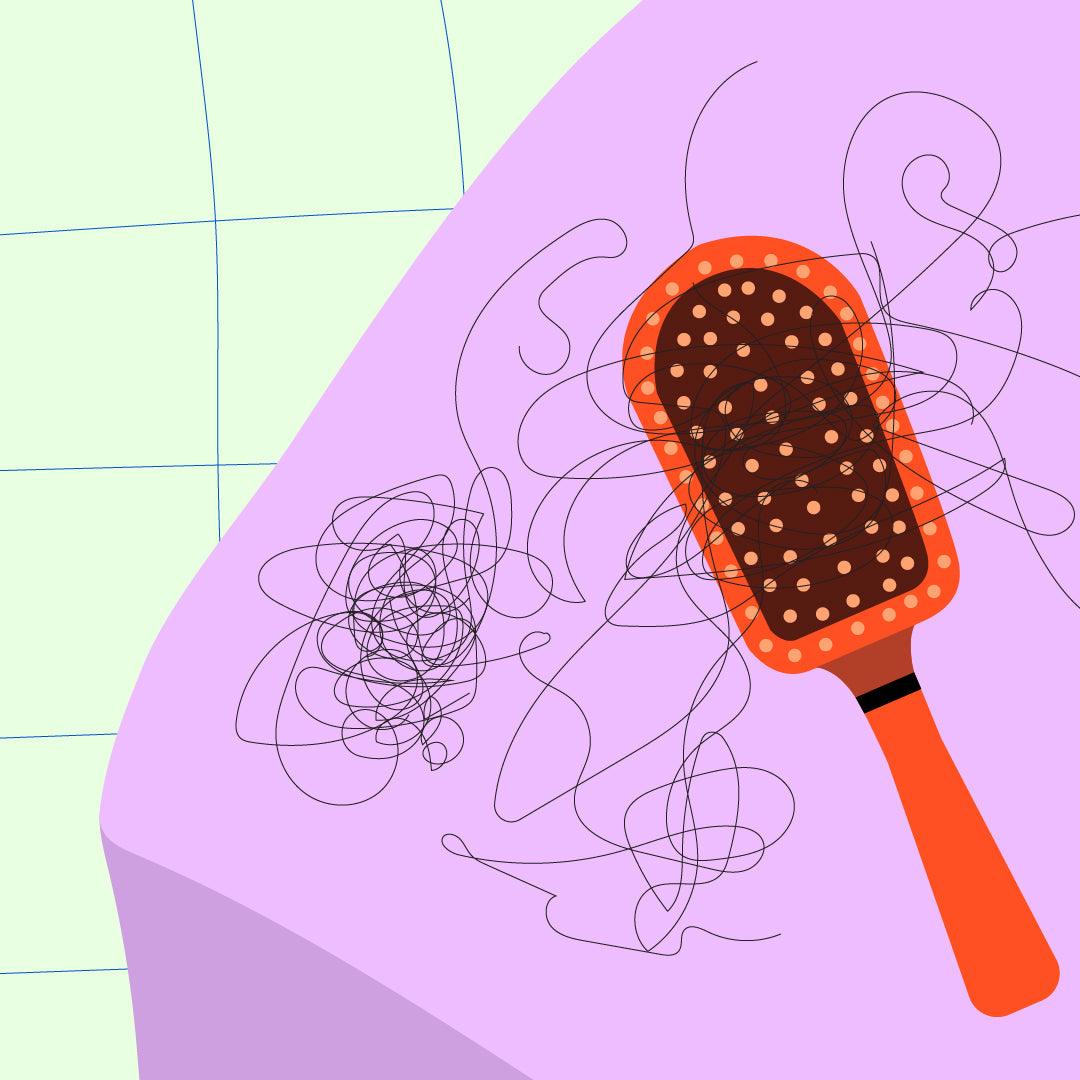
Postpartum hair loss has to be one of the most challenging things that happens after giving birth. Referred to as telogen effluvium (PPTE or ‘excessive shedding’), it’s a short-term condition that involves losing substantial amounts of hair. For context, the average person loses around 100 or so hairs over the course of a day. In postpartum hair loss, the pregnancy hormones that once kept your hair from falling out (by keeping it in the growing phase of its life cycle for longer) suddenly drop off. This change causes a much higher number of hairs (up to 400!) to shed all at once. Cue: big clumps of hair left in your brush/the drain/all over the floor.
It commonly begins between two-four months postpartum, peaks around three-five months postpartum, and, while classed as a temporary condition, can continue up to – and in some cases, beyond – one year. It’s hard to find concrete figures on how many women in Australia are impacted by postpartum hair loss, but there are studies reporting between 50-90%. One more recent study found 91.8% of women experience PPTE. The trickiest thing is that it affects everyone differently, so some new mums will notice a slight decrease in their overall fullness, while others will lose significant patches and be convinced they might permanently balding.
It’s difficult to appreciate what a struggle postpartum hair loss can be unless you’ve lived it. There’s the hair fall itself, which can be seriously confronting, but there’s also the impact it can have on your body image. “I noticed that the hair loss really began around two to three months postpartum. I have fine hair, and not tonnes of it, so I was freaked out that I would have no hair left on my head. At its worst, I was losing large clumps of hair when brushing and there was hair fall everywhere in the house. My 3-year-old would come to me crying because she would get my long hairs wrapped around her fingers. As with every other woman I was already experiencing all the other postpartum things: my body had changed, breastfeeding was painful and I was exhausted. Frankly, losing so much of my hair was the cherry on the cake,” says Justine Le Bars, founder of Echo Communications who experienced PPTE after all three of her children’s births. Kate Casey, The Memo co-founder and CEO felt similar unease with her symptoms. “My hair has been thin and quite flat my whole life so I was particularly nervous about postpartum hair loss. Initially I had hoped that I had escaped it, but around two months after my first was born I noticed more hair than ever before in the basin, and it got worse from there. My hair would come out in clumps after washing and brushing, and when I'd wake up in the morning, there was hair on my pillow. I have full, blunt bangs which became so tragic that I started pinning them back, but of course that only made my receding hairline more visible. The hair loss shattered my confidence. I was so self conscious I was embarrassed to see my friends at times. I avoided photos so I hardly have any of myself and my children during these months.”
There is so much pressure to ‘bounce back’ after birth, and this is yet another element of a societal expectation that’s unattainable for many women. Which is why it’s so easy to get sucked into spray-on hair treatments and other products that promise to restore your hair to its former glory, but tend to just make your next wash more difficult.
“Six months after I had my first, I was due to be married,” says Le Bars. “Not ideal as I wanted to wear my hair down for the wedding and feel nice about myself but my hair was so thin. I used a spray that promised to boost growth but I don’t think it worked, maybe because I wasn’t treating the issue from the inside as well. In any case, I opted for clip-in extensions to give my hair some body, but I would have much preferred to have more of my own.”
The other reason gimmicky quick-fixes seem your only option is because, like many symptoms, discomforts and issues in pregnancy and postpartum, it can be largely discredited by healthcare professionals. “I discussed it with my GP multiple times but felt that I was dismissed – a ‘it doesn't last, so don't worry’ kind of thing,” says Casey. “Blood tests showed low iron but even after an infusion, I didn't see improvement. They didn’t recommend anything else. It was particularly brutal for three months, but didn’t go away until after I stopped breastfeeding at fourteen months.
The primary driver in PPTE is the rapid hormonal shift postpartum. It’s biggest hormone dump a human goes through, and includes a ginormous estrogen drop which causes many follicles (including your hair follicles) to transition from growth to rest all at once. There’s not much we can do about that, but there are other contributing factors, chiefly postpartum stress and fatigue, and lacking nutrition. Stress and fatigue can accelerate and extend the hairloss. While taking care of a newborn is fertile ground for stress and fatigue, it’s important to prioritise yourself and your recovery at this time. Not sure how to do this? Start here. The poor nutrition is more easily addressed. Postpartum depletion is estimated to affect 50% of new mothers and nutritional deficiencies (especially iron, B12, vitamin D) are associated with postpartum recovery and hair loss. Diet and supplements can help close this gap. “Even at three and a half years postpartum, I still shed a lot of hair daily,” says Casey, “so I started religiously taking collagen powder and my hair grew so much.” Mini + Me and Krumbled Foods founder Keira Rumble attributes daily collagen to her minimal hair loss in postpartum. “My biggest piece of advice to someone going through postpartum hair loss is to focus on nourishing yourself from within in as many ways as you can,” says Rumble. “The season of life after having a baby is a period of immense change for a new mother and it’s extremely important to look after yourself. If you’re looking for a hair supplement, do your research and find a high-dose, science-backed formula that offers real results. A lot of brands market themselves as great for postpartum hair loss, but require you to take the product three times a day.” There are some practical things you can do, which will minimise follicle aggravation. This mainly means taking care to be slow and gentle with your hair and be as au naturale as possible. Ditching heat styling and tight hairstyles that stress the scalp like ponytails or buns, using silk hair ties and clips when you do need to put it up, switching to a silk pillowcase and using a wide tooth comb to gently detangle. Scalp massage can promote new growth and switching to hair care products that promote strength can look after the hair you have.
“With my third baby, I immediately jumped on the collagen supplement bandwagon and used hair care specifically formulated for hormonal hair loss. The combination worked wonders – my hairdresser could not believe the difference,” says Le Bars.
It should go without saying (but we'll say it anyway) that if postpartum hair loss is causing you distress, it’s a Very Good Idea to see a healthcare professional. Hair loss is linked to several common medical conditions so even if your doctor doesn’t feel it’s a big deal, it’s worth getting the checks that it’s not connected to something else, particularly if it persists beyond a year.