
Starting solids is a minefield—one that I got lost in; but also led me to discover the incredible benefits of hemp seeds. Alongside working out how much iron and protein your kid needs (while trying to stop them from eating the mouldy sultanas they found under the couch), there’s the added concern of what they’re eating off. Plates, rather than the floor, is a start.
As we’ve become more aware of the things we put in and around our bodies, particularly the risks of BPAs and phthalates, many parents are looking for alternatives to conventional plastic dinnerware. But what’s best: bamboo? Silicone? Joining a pottery class and exclusively making all your own ceramics? Cue the smash
Deciding what’s best for your family is a personal choice. But knowing you probably don’t have time for ceramics right now and are likely looking to make life easier, not harder, stainless steel is a durable, easy-to-clean option that’s stood the parents are newly discovering as the solution.
Why stainless steel?
I’ll be honest, I’m a stainless steel girl. My drink bottle is literally plain silver stainless steel. My mother bought me an expensive stainless steel cutlery set over a decade ago when I moved in with my boyfriend—the relationship didn’t last; but the cutlery did. Not a scratch on it, to this day.
Stainless steel is an alloy—primarily iron, with chromium and, depending on the grade, other elements like nickel. Chromium helps make it resistant to corrosion, which is why good-quality stainless steel can withstand years of everyday use without rusting, staining or deteriorating.
That’s why it’s great for kids: it’s made to last, scratch-resistant, and cleans incredibly well. Plus, it won’t break when your kid throws their plate across the room—you might, but their dinnerware won’t.
One of the best benefits is that it’s non-porous, meaning it doesn’t readily absorb food, smells, or bacteria making it stain-resistant, easy to wash and look after. Most stainless steel dinnerware, like GOGO KIDDO is dishwasher safe, making it a particularly appealing option. It also won’t end up smelling or tasting like the cleaning products you use in the dishwasher—another benefit of non-pourous materials.
Unlike plastic, it isn’t going to gradually degrade with repeated use in the same way. A well-made stainless steel plate or bowl can be used every day and last years. It’s durable and reliable, plus it’s lightweight and sturdy enough to take camping or on picnics, making it multi-use.
What do the stainless steel numbers actually mean?
You’ve probably seen numbers like 18/8, 18/0, or 304 and wondered whether you’ve accidentally bought someone’s wedding gift with engraved dates. (No? Just me?)
For those that don’t know, the numbers refer to the composition of the steel. For example: 18/8 refers to approximately 18% chromium and 8% nickel. 304 is a specific grade of stainless steel that is commonly made up of around 18% chromium and 8% nickel, which is why you’ll often see the terms used together.
To be used every day in a war zone, like kids' dinner, the most important thing is quality stainless steel that is durable and corrosion-resistent. GOGO KIDDO uses 304 stainless steel across its range, designed to withstand the kind of daily wear and tear that comes with feeding young kids.
Stainless steel doesn’t have to be boring
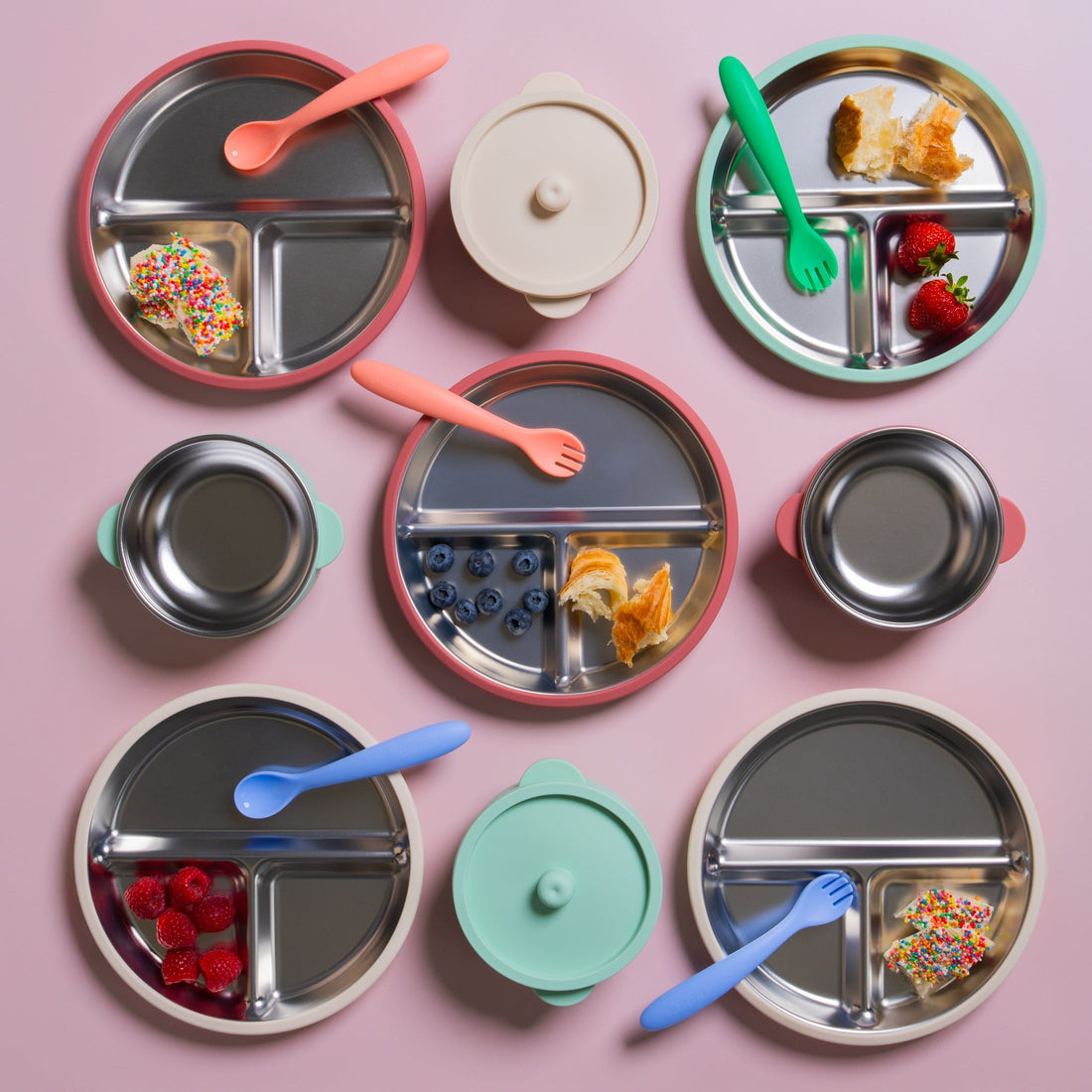
The one downside of plain stainless steel: kids don’t yet understand the minimal aesthetic. It’s not giving dopamine whimsy, toddler style. Which is why the GOGO KIDDO combination of stainless steels and silicone gives the colourful and tactile appeal kids love, with the benefits of stainless steel. Pairing the durability and easy-clean properties of stainless steel with colourful, food-grade silicone provides a softer, more tactile surface for little hands, with handles and sleeves providing easier grip and suction bases to help deter your baby training for the Plate Throwing Olympics.
For parents, the removable silicone sleeves make the whole product easy to wash and dry rather than leaving food or moisture sitting in a hard-to-reach seam. The silicone across GOGO KIDDO’s feeding range is food-grade and certified BPA-, PVC- and phthalate-free and the products are tested to be dishwasher safe. The range also uses non-toxic dyes across all materials, because who knows which part will end up in your kid’s mouth.
Is stainless steel safe?
Yes. In Australia, high-quality food-grade stainless steel is safe and non-toxic. Of course, stainless steel is made for numerous purposes so buying high-grades (like 304) ensures quality. Stainless steel just isn’t recommended for those with nickel allergies, due to its composition.
It’s sustainable, designed to be used for years rather than months, and when you're really done with it, it's also recyclable. After all, the most sustainable product is the one you can keep using.