
Thrive. How do we define thriving? Because while our growing baby bounced around happily at every scan, a series of tests revealed that she was very much not well. At 18 weeks, I received a call from our OB, a call that forever divides my life into Before and After. I was told that if our little girl even made it to term (which was suddenly a big ‘if’), she would face a life full of serious medical issues, due to an extremely rare diagnosis. Tucked amongst medical jargon that explained her less than one in a million diagnosis, were the words ‘failure to thrive’.
Before all this, I’d always been a planner, and that had worked out for us in life. My husband and I, even before we were married, had always planned on having two kids, but after our first daughter was born, I couldn’t imagine only getting to experience bringing life into the world one more time. Suddenly, I wanted three kids, though my husband still wanted two. It became a running joke, "maybe our next pregnancy will be twins, and it will be decided for us!" I also wanted to be done with having kids by the time I turned 35. There wasn’t necessarily a reason behind this, it just felt like a good time for me to conclude the season of childbearing, and for us to start looking forward to raising our children and balancing that with my career and my husband’s small business.
That second pregnancy came, and there was one week, where everything felt perfectly planned. Our OB appointment revealed not one, but two heartbeats. Twins, due the day before my 35th birthday.
I barely had time to reflect on the serendipity of our situation, as there were issues from the start. My initial scan showed that one baby was significantly smaller than the other. We spent one week hoping and willing for both our babies to make it. The next scan revealed just one baby with a healthy, thumping beating heart.
My dream of three babies by 35, was gone, but all of my energy was poured into gratitude. Gratitude for our darling two year old daughter. Gratitude for our one remaining baby, who continued to grow, despite losing her twin.
That growth, we were told, likely wouldn’t last. After weeks of uncertainty, at 18 weeks I woke up, wondering if today would be the day our results came in. A few hours later, I sat in a meeting room at work, as our OB explained over the phone that things were far more severe than we’d ever imagined possible. The gratitude and hopefulness I’d been focusing on immediately crumbled into deep grief and shock, and a numbness that I still can’t quite put into words.
I gave birth to our second daughter at 18.5 weeks, on a clear, sunny Melbourne Monday. As I held our daughter in my arms, she was impossibly tiny, but perfectly formed: long and thin fingers and toes, and her dad’s nose. Our OB gently pointed out a few physical features that were signifiers of her diagnosis. In the moment, I numbly said, "yes" when she offered to do this, but this exercise is one that I am extremely grateful for. In the weeks that followed, I would frequently have panicked moments that we had received the wrong test results, and acted on the wrong information. The panic was all-consuming and I’d feel like I couldn’t breathe. The only thing that could calm me down was thinking back to those quiet minutes post-birth. The physical reminders that no, our little girl’s results were true, devastatingly so.
In the newborn haze, you forget all the crazy, amazing things your body is capable of, and how it recovers from birth. When there is no newborn to distract you, each of these is a knife through the heart, a painful reminder of what should be. I lay in bed clutching the baby blanket that had held our daughter, crying in pain as my uterus contracted back down. Postpartum items I didn’t need were exchanged for a book on pregnancy loss, sending both me and the sales associate helping me into floods at the cash register. I went on a walk with a dear friend and her newborn baby, and was able to laugh at the fact that we were both in diapers.
I became extremely triggered by the words ‘decision’ and ‘choice’. Well-meaning friends said things like ‘what a difficult decision that must have been’ or ‘what a heartbreaking choice’ - as if we had had a choice in the matter. Given the medical issues our daughter would have faced, bringing her into this world felt cruel - that is, if she had even made it.
Over time (and with psychological support) I have come around to accepting ownership of the word ‘choice’ again. Accepting that this was indeed a choice that we made, even if it didn’t feel like one. We chose to spare our younger daughter pain, we chose to not have our older daughter grow up with her needs de-prioritised out of medical necessity. We chose a version of our lives where our family can hopefully thrive, rather than just doing everything we can in the hopes that our youngest child survives. It’s a choice we have to live with every day, but one I am at peace with.
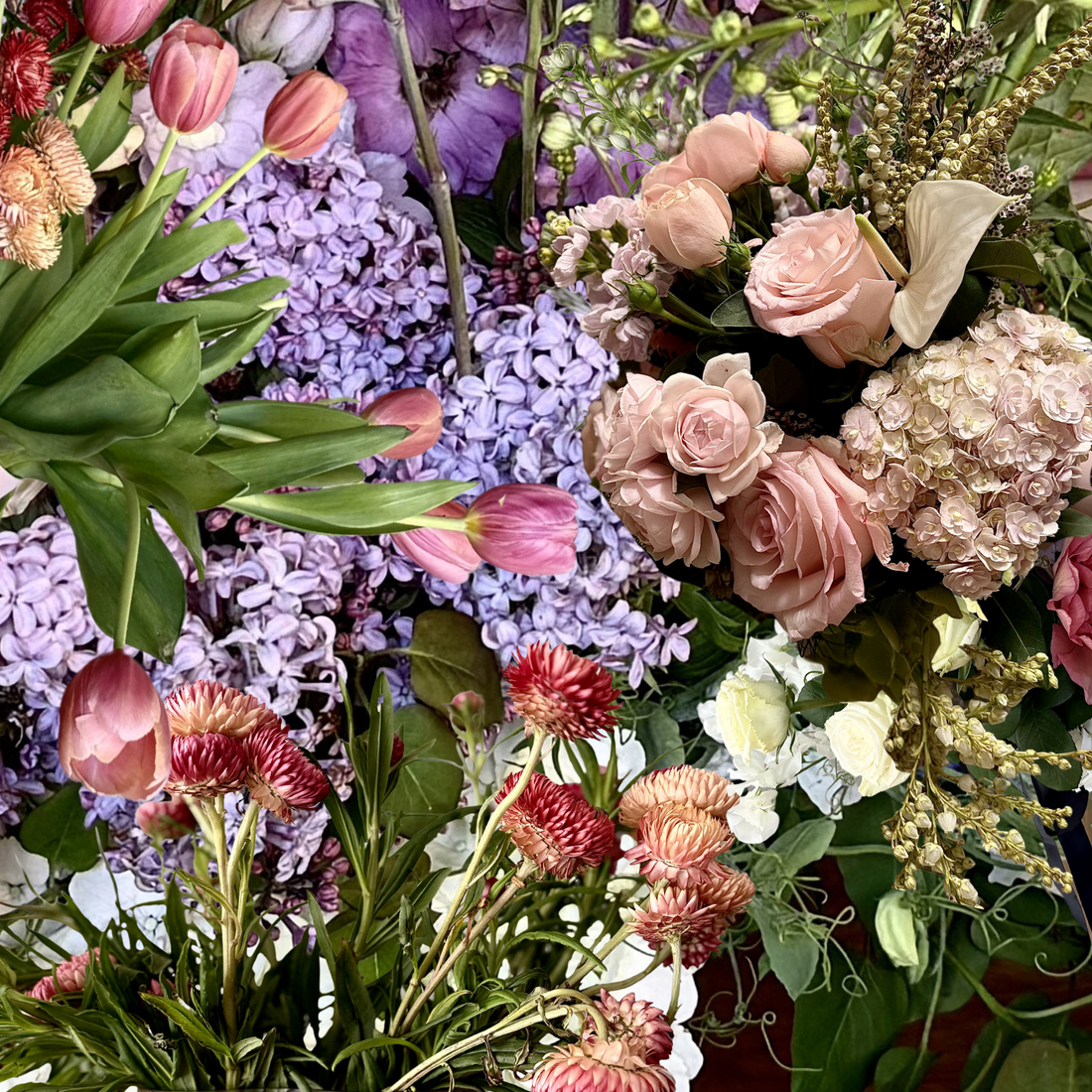
The support of our friends and family is without a doubt what carried us through the darkest period of our lives. Our two fridges were filled to the brim with food, we had to get creative with what technically constitutes as a vase, and for the first month or so, it felt like our house was a most-welcome revolving door of loved ones staying, dropping in to check on us, or just sitting with me through the dinner and bedtime routine while my husband was at work, so I wasn’t alone. My mom dropped everything to fly halfway across the world to be with us, and a conversation with my dad immediately after receiving our results gave us the strength we needed to move forward. My husband’s family snuggled on the couch with us with soft cheeses, G&Ts and our favourite baked goods. Our community is everything to us, and showed up for us in every way possible - from a friend who graciously came and shared her own late term pregnancy loss and birth story to help prepare me, to other friends who snuck into our backyard to avoid disturbing us, with milk crates full of food, flowers, face masks and a little stuffed animal seagull for our toddler, who referred to her sister as ‘Baby Seagull’. She still sleeps cuddling it tightly every night. It wasn’t all roses - some people didn’t think to check in at all, or have offered no acknowledgement of our loss when we’ve seen them. But again I turned to gratitude, and chose to focus on the positives rather than the letdowns.
At that first appointment, it was gratitude for two heartbeats. Then it became gratitude for one healthy baby. Then it was gratitude for the science that allowed doctors to pinpoint our daughter’s exact rare diagnosis, an incredible Obstetrician, healthcare team and system, and the ability to choose. Gratitude for our friends, family and even strangers who showed us kindness - the woman at the baby store who gently wrapped up the baby blanket I chose, while I stood there sobbing. The local bookstore owner who wrapped me in a hug when I asked if they had any books on pregnancy loss. The Memo employee who helped our friend select postpartum items ahead of my induction. For friends who checked in frequently even though they had newborns of their own. Most of all, gratitude for my beautiful husband and our gorgeous, clever two year old, who has been our light throughout this whole process.
There was a little dress I wanted to buy both the girls - ‘after we’re in the clear’, I told myself. Instead, only one sits folded in the nursery drawers. Instead of it being the matching outfits featured in our first family photos as a complete family, it will be what my daughter wears the day we spread our other daughter’s ashes. The day before my 35th birthday.
The day before I gave birth, my friend told me about microchimerism - the fact that even after a baby is no longer part of you, whether through miscarriage or birth, a small number of cells remain. I have found this hugely comforting, and am filled with gratitude for the fact that even once her ashes flow along the waters near our home, our daughter will always be with me, as will her twin. So as I head into 35, it will be with both my daughters, and all three of our children, towards whatever comes next. I’m trying to plan less, but know I will be grateful for this next chapter, and the chance to thrive.
Advice for women going through late term pregnancy loss:
- You will have your own timeline for grief, and that is ok. I started getting back into work three weeks after giving birth. My OB had advised that I take 4-6 weeks off as a starting point, but after three weeks at home enveloped by my grief, I needed to start focusing some of my energy back into the outside world and work provided the perfect outlet to do so - with a lot of support from my wonderful bosses and coworkers.
- The Perinatal Loss Therapist Register is a great resource to help find psychological support, if you are unable to receive any through the hospital where you give birth. Perhaps have a partner, family member or close friend handle outreach to therapists. If it is a planned birth, ideally try to get a session lined up the week you give birth, or as soon as possible - the postpartum blues happen even in this scenario, so psychological support is extremely helpful in those early days.
- I found the book Beyond Grief unbelievably helpful in those early days. It was the only thing I could read that brought me both understanding (particularly of how my husband was processing our loss) and an indication of a path forward.
Advice for people with a loved one who has gone through late term pregnancy loss:
- Ask the question, and often. I had many people say “I was thinking of you today, but didn’t want to check in and remind you” on days like Christmas, New Years Day etc. We are always thinking about the babies we have lost, and for me, it was so welcome to know that our loved ones were thinking of us and our baby too.
- Say your friend’s baby’s name. When we met our daughter, I said her name to her over and over - and still feel grief over the fact that I will never get to say it as often as I want to. Hearing my friends call her by her name is a beautiful reminder that she was here, she was real, and she is remembered.