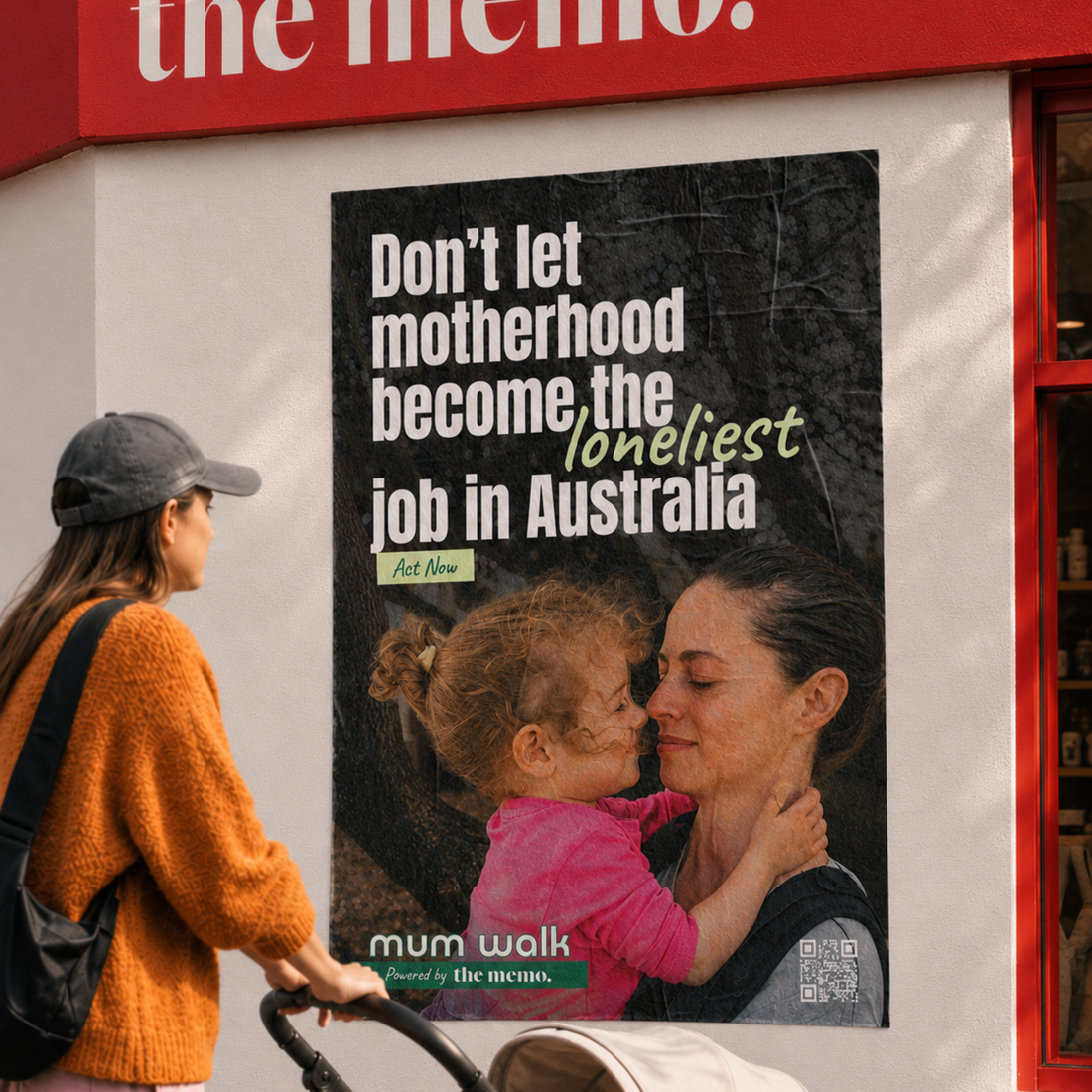

Australia is in the grip of a loneliness epidemic — and a new report shows mothers are bearing the brunt of it.
The inaugural Motherhood Connection Report, released today by Mum Walk powered by The Memo, has found that more than 90% of mums surveyed have experienced feelings of loneliness or isolation after becoming a mother, with nearly half scoring "high" or "severe" on the UCLA Loneliness Scale — a level known to significantly impact wellbeing. One in six mums fall into the "very high" category.
The Mums Need Mums: Fill the Connection Gap Now report, based on a survey of 889 mothers conducted over four weeks, paints a picture of a generation of women navigating one of life's most vulnerable transitions, largely on their own. Sixty-nine percent of respondents said motherhood was lonelier than they expected.
"I didn't realise how isolating having a baby would be — that was, I think, the one thing none of my friends had warned me about," one mother told researchers.
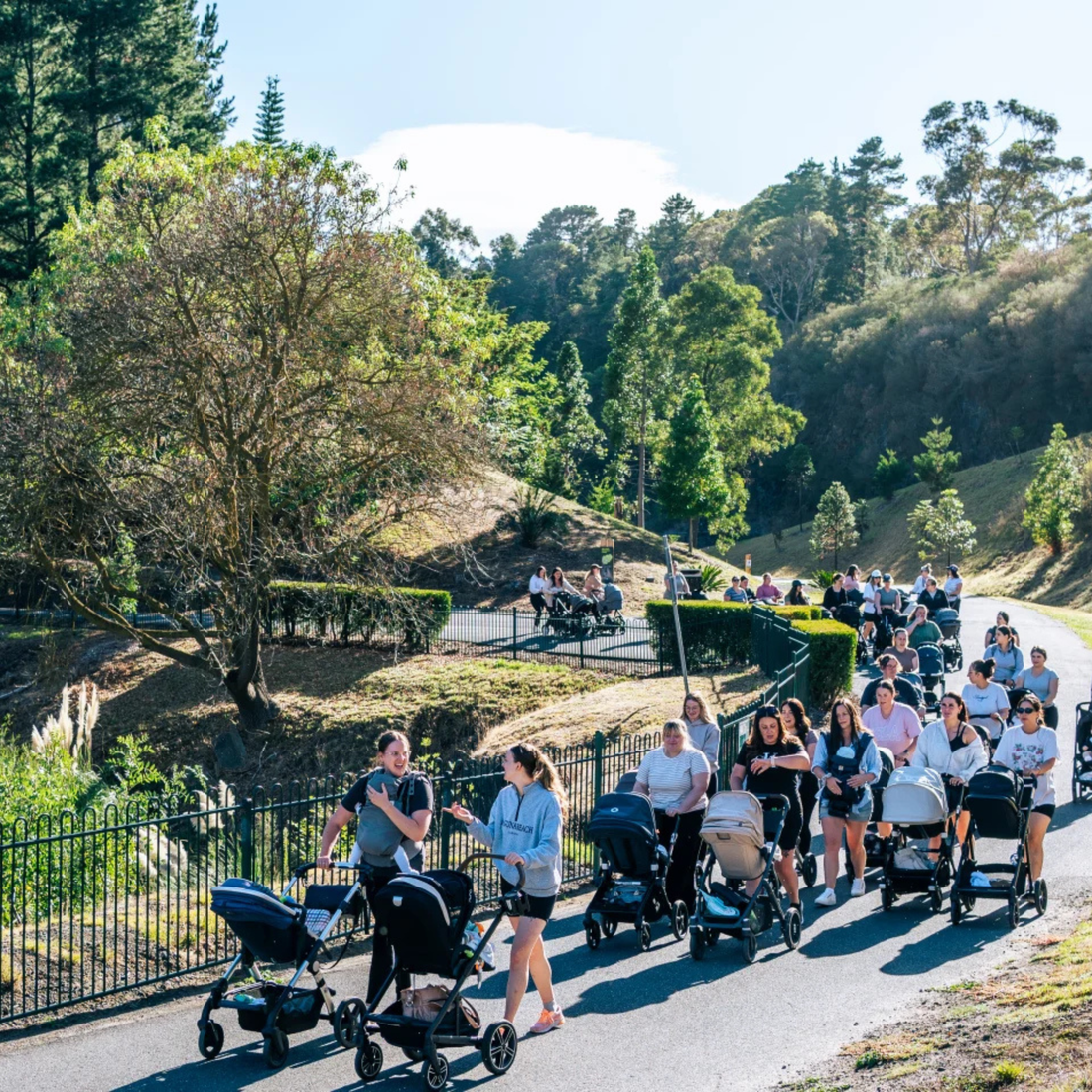
"The results prove that loneliness in motherhood is the norm, not the exception," says Kimberly Kay, founder of Mum Walk which runs free weekly walking groups for mums across the country. "Which I hope helps mums, who are feeling the weight of isolation or loneliness after birth, know that they aren't alone in having those feelings.
"It isn’t surprising, given that Mum Walk has scaled so quickly because of the deep demand across Australia for more chances to connect. However, what does feel most urgent about the findings is the depth and severity of loneliness felt by mothers," she says.
A system built for clinical care, not connection
The report argues that maternal loneliness isn't an accident, it's the result of a support system designed around clinical check-ups and medical milestones, rather than community and connection.
While free, council-led mothers' groups remain an important entry point for many new parents, the report found they are time-limited, capacity-constrained, and often determined by postcode. Miss the window, and there's no second chance — and for second-time mums, the door is often closed entirely.
Across the country, mothers reported being turned away from groups that were full, or finding that groups had simply disappeared. "My council-led group was full and I 'slipped through the crack,'" one mum said.
The top three drivers of disconnection identified in the report were mental load, burnout and exhaustion; the pressures and comparison culture of social media; and a lack of free, in-person spaces where mums and babies are genuinely welcome.
Mums are building the village themselves
Perhaps the most striking finding is what's actually working. When asked to rate the effectiveness of different ways to connect, mothers ranked peer-led, mum-centred groups like Mum Walk as the most effective by a significant margin: with an 89.7% effectiveness rating and the lowest rate of negative experiences of any option, well ahead of council-led groups, baby classes, fitness classes, and online communities.
The report points to a cultural shift needed from "baby-centred" to "mum-centred" activities. As one mum put it: "Mum Walk was the first activity that was about connecting with the mums! All the other activities I tried were entirely centred around the babies."
Cost was also flagged as a major barrier, with 87% of mums saying access to more free ways to connect would improve their mental wellbeing — particularly given a single Pilates class can cost $35 or more, and baby classes can run to hundreds of dollars per term.
Technology hasn't filled the gap either. Despite the explosion of online parenting communities, only 8% of mums said social media made them feel more connected, while almost one in four said it left them feeling more disconnected.
"Mums need low-pressure, free, mum-led spaces where they belong in order to connect. We also know that connection is built through repetition and consistency, which is why Mum Walk’s program is built on showing up at the same time and same place every week for mums," says Kay.
Why this matters for maternal mental health
The report's findings echo what clinicians have long observed: social connection is one of the strongest protective factors against postnatal depression and anxiety. According to PANDA, around one in five mothers experience PPD or PPA, with isolation a primary risk factor — and roughly half go undiagnosed due to stigma and normalised distress.
"From a Clinical Psychology perspective, social connection is one of the strongest protective factors against postnatal depression and anxiety," says Frances Bilbao, a psychologist at Mums Matter Psychology.
For mothers who took part in Mum Walk, the impact has been tangible. "If it was not for Mum Walk I do not think I would have coped at all," one participant said. "My mental health has definitely improved since going — it's the highlight of our week," said another.
A call for change
The report sets out a clear set of recommendations: that social connection be recognised as core maternal health infrastructure, funded alongside clinical care; that government investment prioritise free, local, mum-led connection opportunities; and that support extend beyond the early postpartum window, to second-time mothers, and across all postcodes, not just where you happen to live at the time of birth (so many families move in the first year with their baby).
For Kay, it's the first step in a broader campaign to make connection a recognised part of postpartum care.
"I hope that our Government recognises that the transition of becoming a mother is a major trigger for loneliness and requires action to support more mothers. What is currently on offer is leaving too many mothers to walk through motherhood alone," she says. "We know that loneliness happens when you have too many risk factors, and not enough protective factors," she says. "For a high-risk group like postpartum mothers, we need more protective factors like peer-led support to protect mums across Australia."
Sign the petition and read the full Motherhood Connection Report now at mumwalk.org.
If this article raises any issues for you, help is available.