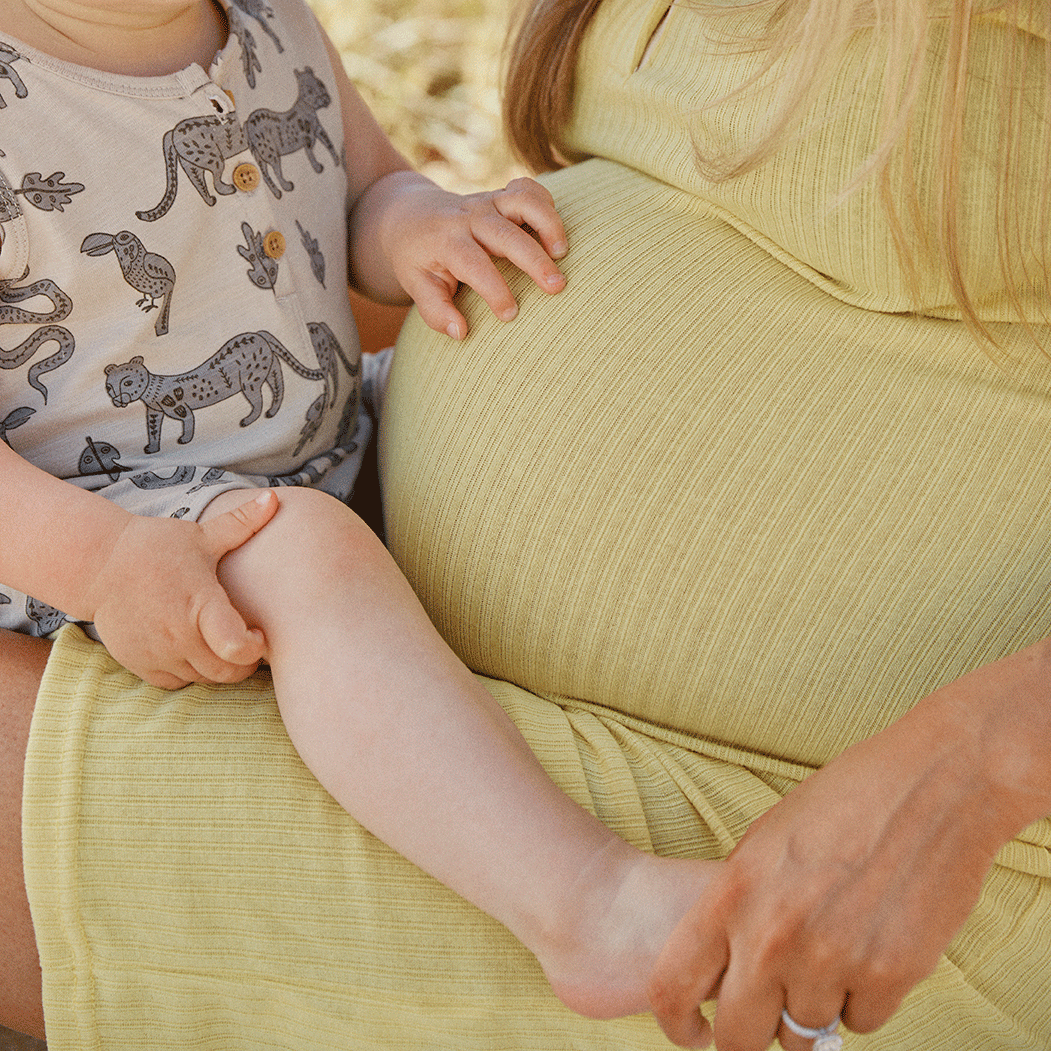

Round two is a rollercoaster of emotion.
For me, second pregnancy hit different. I’m four years older, and wiser. Life is more full with responsibility and to-dos. We have a three-year-old son, August, who’s also getting a tiny new housemate. It's makes sense, but it did surprise me. Here’s eight things I thought about in my second pregnancy.
1. I Need to Make the Most of the Time I Have Left With My First
From early in my pregnancy, I started mourning the loss of my one-on-one time with my son. August changed my whole world, whole person, whole heart, and I never would want anything to jeopardise our relationship. Which I, of course, know will happen regardless — we have years of disagreeing on haircuts, career decisions, relationships ahead of us — but having another child is on me. A big part of the reason I wanted another child was for August. My husband and I both adore our siblings, they are our favourite people in the world, but that didn’t negate the guilt and hurt I felt about having limited time, “just the three of us”. I was very emotional about it. Hormones are crazy. It manifested as bouts of crying, elaborate plans for ‘perfect family moments’, immense mum guilt about work and other commitments (more crying), and pleas to my partner that we need to “make the most of our time with him”. Ofcourse, you can’t cut all your commitments, and pregnancy slows you down quicker than you want it to, so while it’s important to savour and prioritise your time together, you don’t have to go overboard. Kids just want your time. Not fireworks and holiday (though we did take him on a big holiday where we could be with him non-stop for a month). While possibly felt a little more intensely by me, my friends with second children have confirmed they absolutely missed their first born. Particularly in the early newborn days when in early recovery and usually apart from them. However, they also confirmed that you do love that new baby just as much as your first, even if you don’t think it’s possible, and no love is taken away from the other, there’s just more love to go around.
2. This Might Not Work Out
I had a miscarriage before I fell pregnant with August, and was well aware that 1 in 5 known pregnancies end in miscarriage, but in the last four years as a parent, statistics about child loss and fertility have become connected to people in my life. Real people, not just statistics. I’ve had friends experience difficult fertility hurdles, nonviable diagnosis, friends lose their babies beyond 20 weeks or during birth. This has had the dual effect of making me grateful for every milestone met, scan completed, heartbeat heard, and also cautious to get too far ahead of myself. It's also made me feel extreme guilt about things going well. Why should it be relatively easy for me but hard for someone else? It's a spiraling thought cycle, but where I've landed is this: No one person's fertility journey affects another's. They are as unique as the babies born from them. You can't buy the last baby on the shelf, but deep empathy and grace should be exercised. Don't ignore other people's pain if you are privy to it, give them space to process your news, but don't exclude them from your journey unless they express as such, and if they do, don't hold any ill-will towards them. Being prepared for things going badly won’t prevent hurt or pain. There are some things you can’t “prepare” for. Awareness is always good, sensitivity should be exercised, but joy and excitement should be felt. It's important to celebrate the good in life. It's your life, and you only get one.
3. No Pregnancy Is The Same
One of the reasons things ‘not working out’ was so prevalent in my mind was because my pregnancy was so entirely different from my first. In my first, I felt horrible. I was constantly throwing up. I couldn’t stay up past 8pm. I was rotten. This time, I felt great. Entirely unpregnant. No nausea, no sickness, no tiredness. When I got “bump-y” it was high and out, not neat and low like my first pregnancy. My placenta is in a totally different spot and the pain points have been different. Though the third trimester has twice blessed me with pelvic girdle pain and sweaty/swollen hands and feet.
4. This Is Not as Much of a “Thing” as Last Time
Possibly because I felt a lot better than I had in my first pregnancy, however I suspect mainly because we have a 3-year-old this time and life is busier, but being pregnant didn’t get me much sympathy or “you rest, you’re pregnant”, this time. Except when I was with my mum (mums are the best). So, when your life is too busy for other people to have much headspace for you, give it more of your own. Make and prioritise appointments to aid your pregnancy journey: osteo, chiro, therapy, massage, pilates, whatever you need. At home, flag when you need a break, to put your legs up the wall or have an early bedtime. Similarly with work, talk with your manager about working from home more or taking sick leave when you need a day in bed. Allocate money to the things that can alleviate your load: a cleaner, Ubers or a dog walker. A 2019 study by Duke University that looked at athletes who took on almost 5,000km runs, Tour de France or similar extreme endurance tests, found that 2.5 times the body's resting metabolic rate was the ultimate limit of human endurance. The study also found that pregnant women, at the peak of their expenditure, are living at 2.2 times their metabolic rate. So yeah, growing babies is pushing your body to the boundaries of its capabilities. Protect your energy.
5. How Will My First Feel About a Sibling
I entered this pregnancy in a somewhat welcome position of having a son that had been asking for a baby for quite awhile. He even got to the point of frustration where he started describing it as “a baby for the house”, when we started referring to cousins of friend’s babies as “his babies”. One of the things we did with him was talk about it early. From three-months pregnant, we started talking about his new role as a big brother, asked him what he thought his sister would be like, and started explaining some of the things that would happen along the way: mummy’s tummy getting bigger, the office becoming the baby’s room etc. Paediatric Psychologist Amanda Abel recommends these conversations beginning no later than three months before your due date, “longer if possible, to give your toddler lots of time to understand what’s happening.” She also recommends reading books on becoming a sibling, talking to the baby through the “tummy telephone”. Spending time with other babies and role playing with dolls is helpful, as well as establishing a routine with independent play. THere are also things she recommends you avoid. “No big changes in the three months leading up to the baby's arrival, be it toilet training, or moving to the big bed and be careful of vague references to change if your toddler seems anxious about the unknown.” Talking to August about the baby has been easy and natural, but he’s not been without his own opinions. A year earlier, we moved into our house and he (a 2-year-old) dragged the feeding chair into his new bedroom after I casually said he didn’t have to have it in his room anymore. So room rearranging has taken some conversation. Mostly it was about making him excited for the new things he was getting in his room and getting his OK for the baby to borrow it. All age gaps have their challenges.
6. I Actually Do Need a Registry?
Almost more than with your first — when you kind of need everything. Piecing together what you need for your second is almost a jigsaw puzzle. Creating a Gift Registry, you identify the pieces you need and it’s easy for friends and family to fill the gaps. Less waste, less drawer-fillers, less leaving your child-less friends to the arduous task of figuring out seasons and baby sizes for a second time. They don’t have time for that. Make the registry.
7. What Will Be Left of My Relationship With Two Kids?
One child has meant less time together for doing “couple” things like dates, dinners and conversations, because we’d need a babysitter to pull that off, but it’s also less time together in general because whenever we’re both available to team parent, we tag team: “you do bath and bed, I’ll clean the kitchen?”. Sometimes this means the parent who goes upstairs to “bath and bed” doesn’t reappear ‘til morning, so even the “sitting not watching a show and scrolling together” doesn’t happen. When you add another kid, what’s left? Relationships need care after having a baby, it’s all very different. While birth only seems to reinforce the respect, love and appreciation you have for each other, it’s in the months after when work and other commitments start to pile back on that things get tense. Ninety-two percent of parents report an increase in conflict in the first year of having a baby. It’s unrealistic to think things won’t change, but they’ll also continue to change. Communication, honesty and support are key to getting you through, and you know, you’ll meet up again in a decade when your kids don’t want a bar of you.
8. This Time, If It's Not Good For Me, It’s Not Good For the Baby
My husband worked overseas for 7 months of our son’s first year. During that time, I was so grateful to have so much help from friends and family, but I also did a lot of things to please other people. I felt everyone else had a right to my child and I had to facilitate that even if it made me anxious, uncomfortable or just a lot tougher as a solo parent. I didn’t put myself or my mental health first, and looking back, that kind of means I wasn’t putting my baby first. For the same reason you put your own oxygen mask on before your child’s, you need to take care of yourself as a new parent. If you’re not good, you’re not good to anyone else. Confidence and knowledge is a big part of it ofcourse, I now know I don’t need to be adhering to a ‘50s housewife ideal to be “doing well”. This time I’ll prioritise my own mental, emotional and physical needs in postpartum and be direct about how people can help me, or how we can make something work if they want to see the baby. Giving yourself permission to say ‘no’ loudly and often is pretty powerful. It also makes you enjoy much more the times you say ‘yes’.