
There are few questions asked of new mothers that carry as much weight as, "How’s feeding?" It's often one of the very first questions people ask after a baby is born. Not, "How are you?" or "How are you adjusting?" but, "Are you breastfeeding? Can you do it? Is it easy for you?" For many women, the answer to that question feels loaded and for me, it has looked different every single time.
I'm a mum of three beautiful children. Johnny is eight, Alfie is six and my daughter Mila is six months old. Three children and three completely different feeding journeys and if they've taught me anything, it's that feeding was never actually the story, confidence was.
When Johnny was born eight years ago, I desperately wanted to breastfeed. Like so many first-time mothers, I had a picture in my mind of how those early months would unfold. Breastfeeding felt like something my body was simply supposed to know how to do. I believed that if I tried hard enough, it would all fall into place. Instead, I found myself struggling with severe postnatal anxiety. I had completely lost my sense of self. I didn't recognise the woman staring back at me in the mirror. My confidence had disappeared, and every day felt like I was simply trying to survive until bedtime. Breastfeeding became all-consuming.
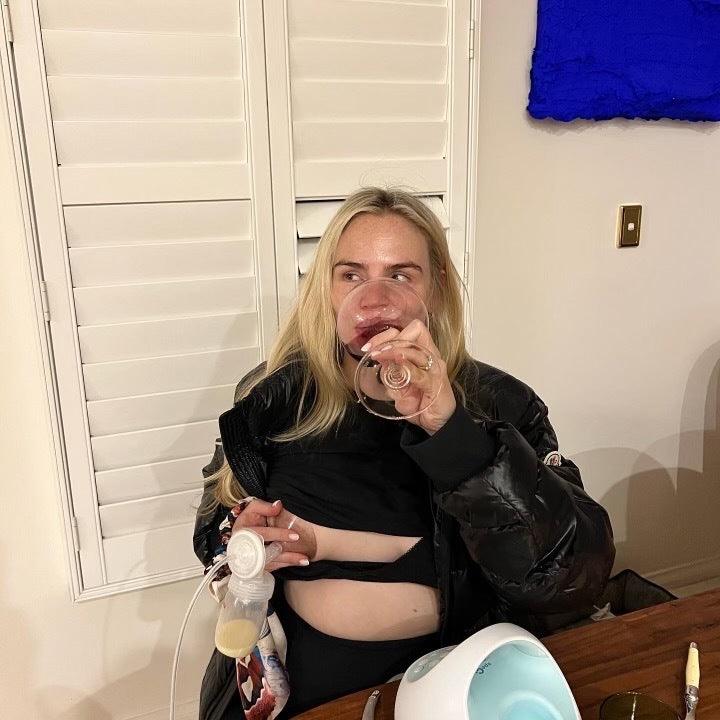
My supply was low, Johnny was hungry, and every spare ounce of energy I had was going into trying to make it work. I was pumping, feeding, worrying, Googling, questioning myself and wondering what I was doing wrong. I remember reaching a point where I felt completely empty. Physically, mentally and emotionally, I had nothing left to give. I even remember thinking, If I feel this depleted, what could I possibly have left to give my baby? Looking back now, I know that thought came from a place of complete exhaustion and anxiety, but at the time, it felt very real.
It was the moment I realised I couldn't keep pouring from an empty cup. When Johnny was six months old, I made the decision to move to formula. Looking back, I know it was the right decision, however at the time, I felt like a failure. The guilt was enormous and the shame was even bigger.
I remember taking Johnny to the park with pre-measured formula kept separately from the bottle. I'd only mix it with water inside the baby bag because I didn't want anyone to see that I was formula feeding. I was convinced people would judge me.
I was the first amongst my close friends to have a baby, so I didn't have anyone who truly understood what I was feeling. I carried so much of that guilt alone, believing I'd somehow let my baby down.What I needed wasn't more advice, I needed someone to tell me that I was still a good mother.
Two years later, Alfie arrived. Although I breastfed him for around four months, something had shifted. I still wanted breastfeeding to work, but I wasn't tying my entire identity to it in the same way I had with Johnny. I'd lived through motherhood once before. I knew babies could thrive in many different ways. I knew difficult seasons eventually passed. There was still disappointment when breastfeeding came to an end, but it no longer consumed me.
Then most recently came Mila, our beautiful third baby. If motherhood had taught me anything by this point, it was that very little ever goes exactly to plan. When Mila was six weeks old, we moved house and at exactly the same time, I was navigating something completely new. For the first time, I wasn't on maternity leave. I now run my own business, THE INARRA, and while I'm incredibly grateful for the flexibility that comes with working for myself, there wasn't the luxury of stepping away completely.
Life felt wonderfully full, but it was also incredibly demanding. Between three children, moving house and returning to work, my already low milk supply quickly diminished. This time, I made the decision to transition to formula. The circumstances weren't ideal, but my mindset was completely different; there was no shame, there were no hiding bottles in the baby bag, there was no explaining myself to strangers, there was simply confidence. Confidence that I knew my daughter and that I knew what my family needed. Confidence that feeding her in a way that allowed me to be present, emotionally available and mentally healthy wasn't something I needed to apologise for.
What I understand now, that I couldn't understand eight years ago, is that a mother's wellbeing matters too. We spend so much time talking about feeding the baby, but rarely do we talk about feeding the mother, supporting her, checking in on her and making sure she is emotionally and mentally well. Because when a mother is supported, the whole family benefits.
Somewhere between my first baby and my third, I stopped asking myself, Am I doing enough and instead, I started asking, What does my family need from me right now? More often than not, the answer wasn't another attempt to make breastfeeding work. It was a healthy, present mother.
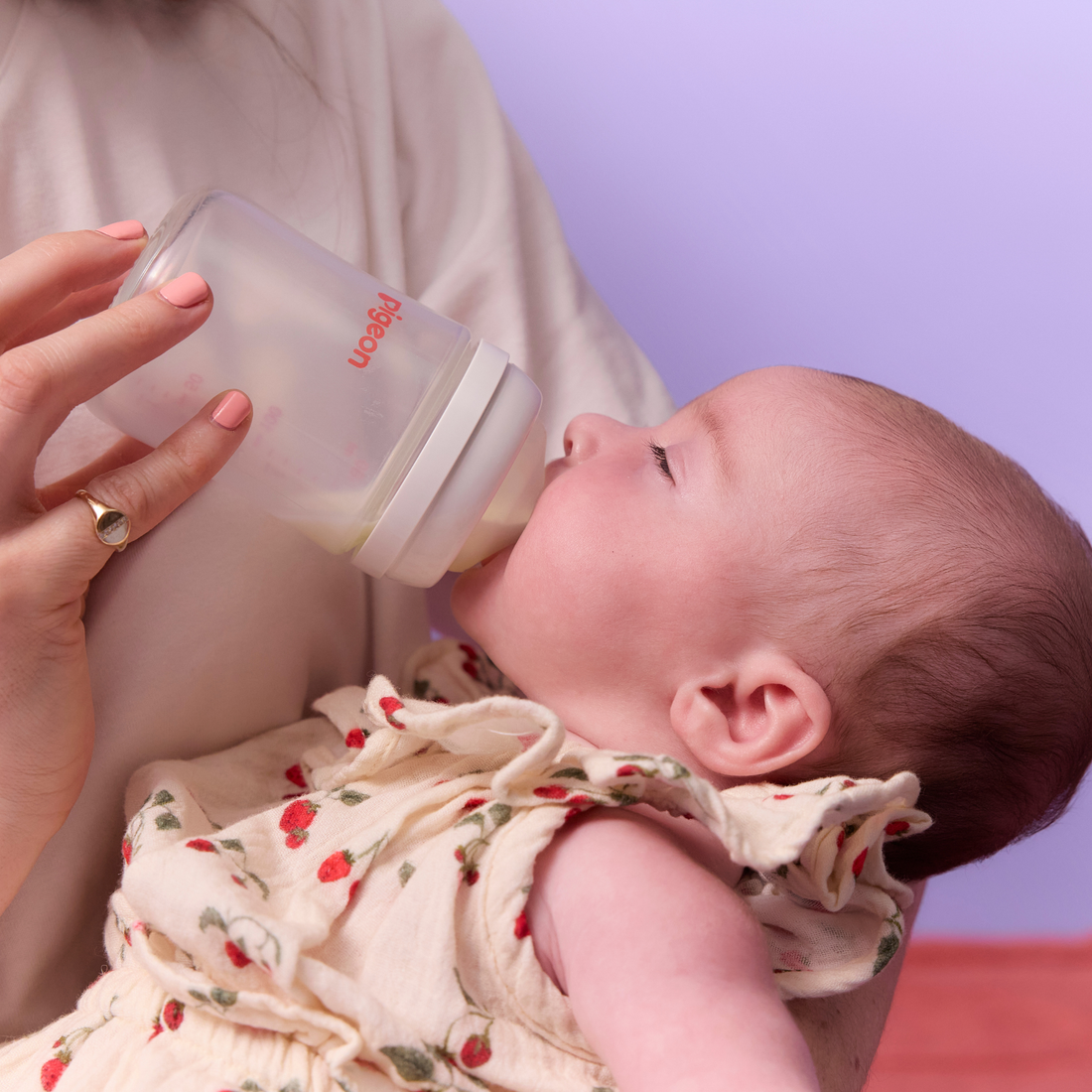
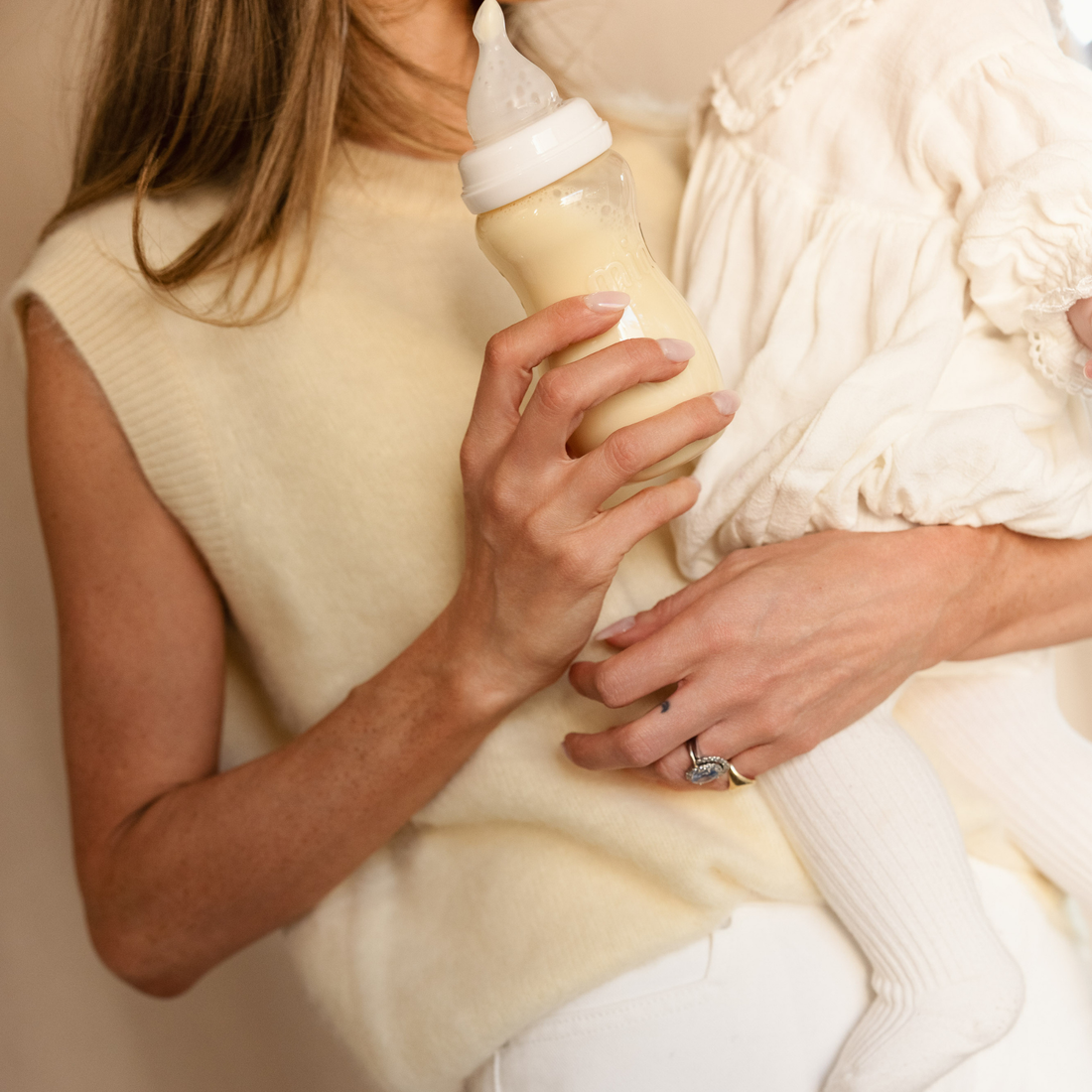
Today, Mila has been exclusively bottle fed since she was six weeks old. She is happy and thriving and so am I. What strikes me most isn't that my feeding journey changed over the years, it’s actually that I changed.
Eight years ago, I believed feeding defined the kind of mother I was. Today, I know it doesn't. Motherhood has taught me that love isn't measured in mL’s, minutes spent on the breast, pumping sessions or carefully laid plans. It's measured in the thousand beautiful moments no one else sees; the cuddles after the bottle, the sleepy smiles at 3am, the eye contact, the comfort, the consistency and the safety. It's measured by showing up.
If I could go back and sit beside the version of myself who cried over bottles of formula and questioned whether she was enough, I'd hold her hand and tell her this: Your baby doesn't need perfection. Your baby doesn't need a mother who is running on empty. Your baby needs you. Healthy. Supported. Present. Because however you feed your baby, that will never define the kind of mother you are.
The older my children become, the more I realise something beautifully simple. No one looks at an eight-year-old and asks whether they were breastfed. They look at whether they're loved.
Looking back now, I wish I'd understood that sooner. If sharing my story helps just one mother put down the guilt she's been carrying, then perhaps that's the conversation we should have been having all along.