
Everyone knows raising twins is harder, except, apparently, the Australian government.
From the moment the sonographer announces, “so there’s one baby, and there’s your other baby,” pregnant with twins, becomes more complicated than a singleton pregnancy.
There are more scans. More appointments. More monitoring. More conversations about risk. More logistics. More planning. More everything.
Then, when the babies arrive, that difference is even greater. Two newborns need feeding, settling, carrying, changing, dressing and soothing at the same time. There are two car seats to clip in and out of, two babies to do the bath, bottle, bed routine with, two babies waking throughout the night, sometimes at the same time, sometimes at different times… because these are two little humans with with their own individual bodies, brains, needs and timings. It’s, at least, double the load, which is why it’s surprising (veering on shocking to outrageous) to learn that, in the eyes of the Australian government, twins aren't considered a multiple birth when it comes to certain support payments, allowances and exemptions. The distinction has come under renewed scrutiny after families and advocacy groups highlighted a gap in Australia's support system that leaves many twin parents facing significantly higher costs without additional assistance.
At the centre of the debate is the fact that Australia's Multiple Birth Allowance (a fortnightly government payment from the government) is only available to families with triplets or higher-order multiples. Parents of twins are not eligible. It was this distinction that left Lucy Young, founder of Bumpstrong and twin mum, feeling unsupported on a systematic level as a new parent. “Medicare and Centrelink don’t classify twins as a multiple birth, which is wild, because our doctors and midwives and hospitals do. Plus, you know, there are multiple babies,” says Young. In other Commonwealth countries twin parents get additional tax credits and additional childcare assistance, but not in Australia. It’s a similar story with Australia’s Paid Parental Leave Scheme, which has just been extended to 26 weeks from 1 July, 2026, but it is paid per birth, not per baby, meaning multiple parents are entitled to no more than singleton parents.
The new budget has largely ignored the needs of twin parents, and how those needs are very different to singleton parents. But with the rates of multiples rising, currently 3% of all births (one in every 70-80 births), up from 1% in the 1980s (and 98% of those births are twins), along with the cost of living, it’s becoming a bigger and bigger issue that Australia's family support systems are largely built around the assumption that babies arrive one at a time.
The cost of two babies at once
Nobody has a baby because they've done a spreadsheet on the financial return. But the reality is that raising children is expensive, and having two babies simultaneously comes with costs that can't be spread out over time. Parents of twins need two of everything immediately. Research commissioned by the Australian Multiple Birth Association (AMBA) found that the first year of raising twins can cost up to five times more than raising a singleton.
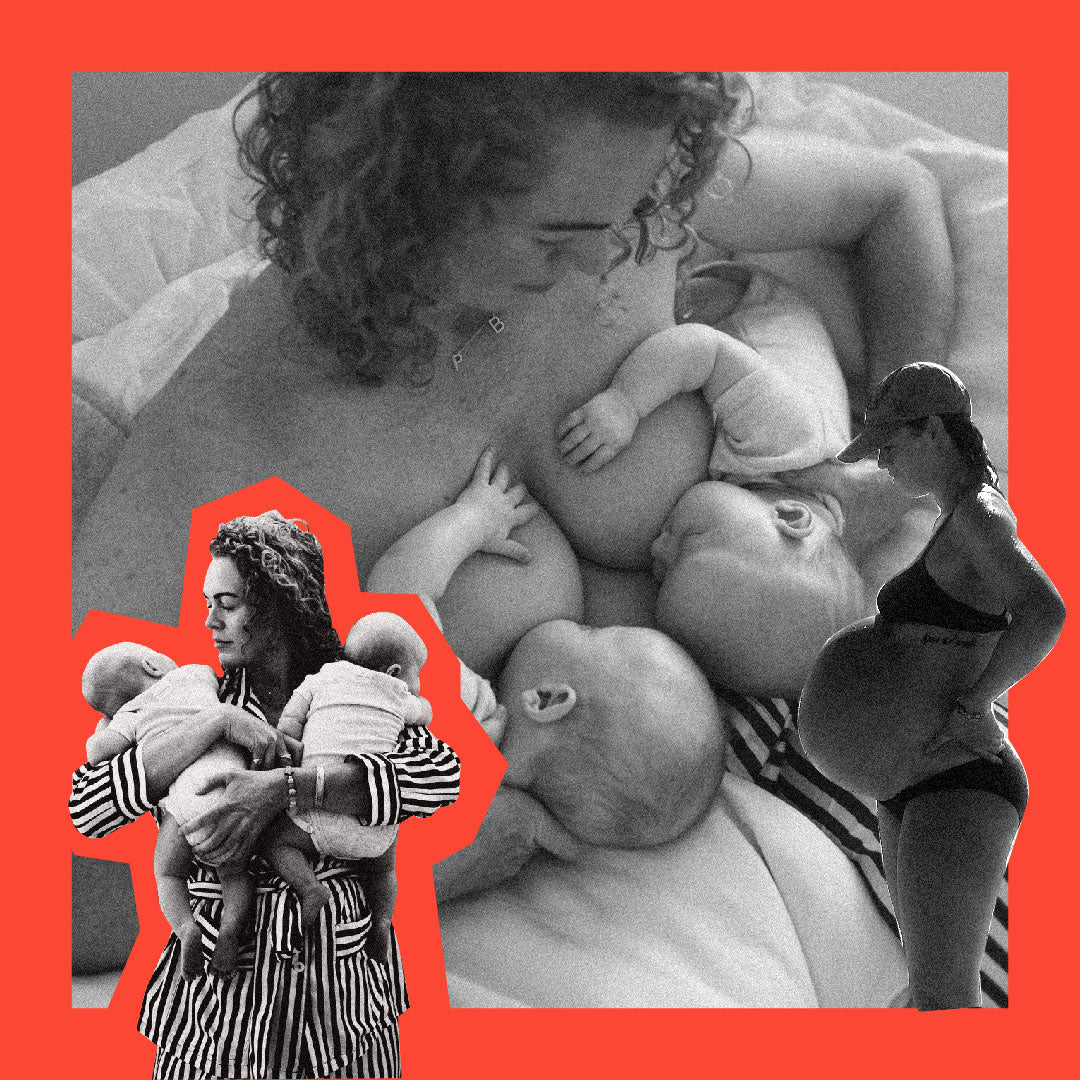
“There was a night where I changed 14 nappies. Seven per baby. We were just churning through those huge boxes of nappies, especially in those early months. I breastfed, but I could only make enough for one baby, so we supplemented with formula, so we were also churning through formula. Then there’s the fact that we needed help taking care of the kids. My partner’s family is in Canada, and mine in New Zealand, and while we were lucky to have some come and stay with us in the first few weeks, but then it became something, that if we were going to access, we had to pay for,” says Young. “We also had to buy a bigger car to fit three car seats across the back seat.”
For many families, the extra expenses begin before birth. Twin pregnancies are more likely to require specialist care and additional monitoring, and twins are more likely to arrive prematurely, increasing the likelihood of neonatal intensive care admissions and longer hospital stays.
A support system designed for one baby
Australia's Paid Parental Leave scheme provides eligible parents with government-funded leave following the birth or adoption of a child. But if you have twins, you don't receive double the entitlement.
You receive the same leave allocation as a parent who has given birth to one baby. Parents of twins may also be eligible for Family Tax Benefit payments and newborn supplements, but these are subject to income thresholds and eligibility criteria. The support available does not reflect the reality of caring for two newborns at the same time.
This is where Australia differs from many comparable countries. According to AMBA, Australia is one of the few OECD nations that does not provide additional Paid Parental Leave specifically for families of twins.
For advocates, this isn't simply a conversation about money. It's about recognising that caring for two babies simultaneously is not the same experience as caring for one.
The mental load of doing everything twice
Research has found parents of multiples experience significantly higher rates of mental health challenges than parents of singleton babies. One study found 61 per cent of parents of multiples reported mental health difficulties during their babies' first year.
That overwhelm begins in pregnancy. Young remembers the shock of finding out she was carrying twins. “We left the appointment and my husband was driving on the wrong side of the road he was in so much shock.” Multiples didn’t run in Young’s family, so it wasn’t something they had even considered. “It turned out both my ovaries had released eggs that cycle, and both were fertilised,” she says. While Young and her partner were trying to process everything that having twins meant, they found that the reaction from others could be far from positive. “The conversation from other twin parents wasn’t always upbeat, which only added to complicated feelings.”
“I definitely parked it for awhile, buried myself in work, and then it was only in the third trimester that I think the overwhelm only really came from elements of, ‘Lord, how am I going to feed two? How does someone feed two babies? How does somebody take care of two? What does the sleeping look like? How do I work this out?’”
Then, when the babies arrive, it’s newborn life in duplicate. The practical realities of which can also make accessing support more difficult. Taking one baby to a mother's group can feel like a military operation when there are two. Running errands, attending appointments and even accepting help from friends can require additional planning.
It's not simply twice the work. It's a completely different parenting experience.
What needs to change
For years, AMBA has been calling for reforms that better reflect the realities of raising multiples, chiefly that parental leave be allocated per baby, rather than per birth.
Also among its recommendations are extending the Multiple Birth Allowance to include twin families and increasing practical support during the first year after birth. In the most recent Federal Budget submission, they specifically called for an additional 16 weeks of leave for each child beyond the first, as well as greater in-home support for multiple birth families.
The organisation argues that better support wouldn't just ease financial pressure. It could improve outcomes for parents and children by reducing stress, supporting parental wellbeing and acknowledging the unique challenges associated with multiple births.
Their argument is simple: if the demands of raising twins are recognised by hospitals, healthcare providers and parents themselves, they should also be recognised by policy.