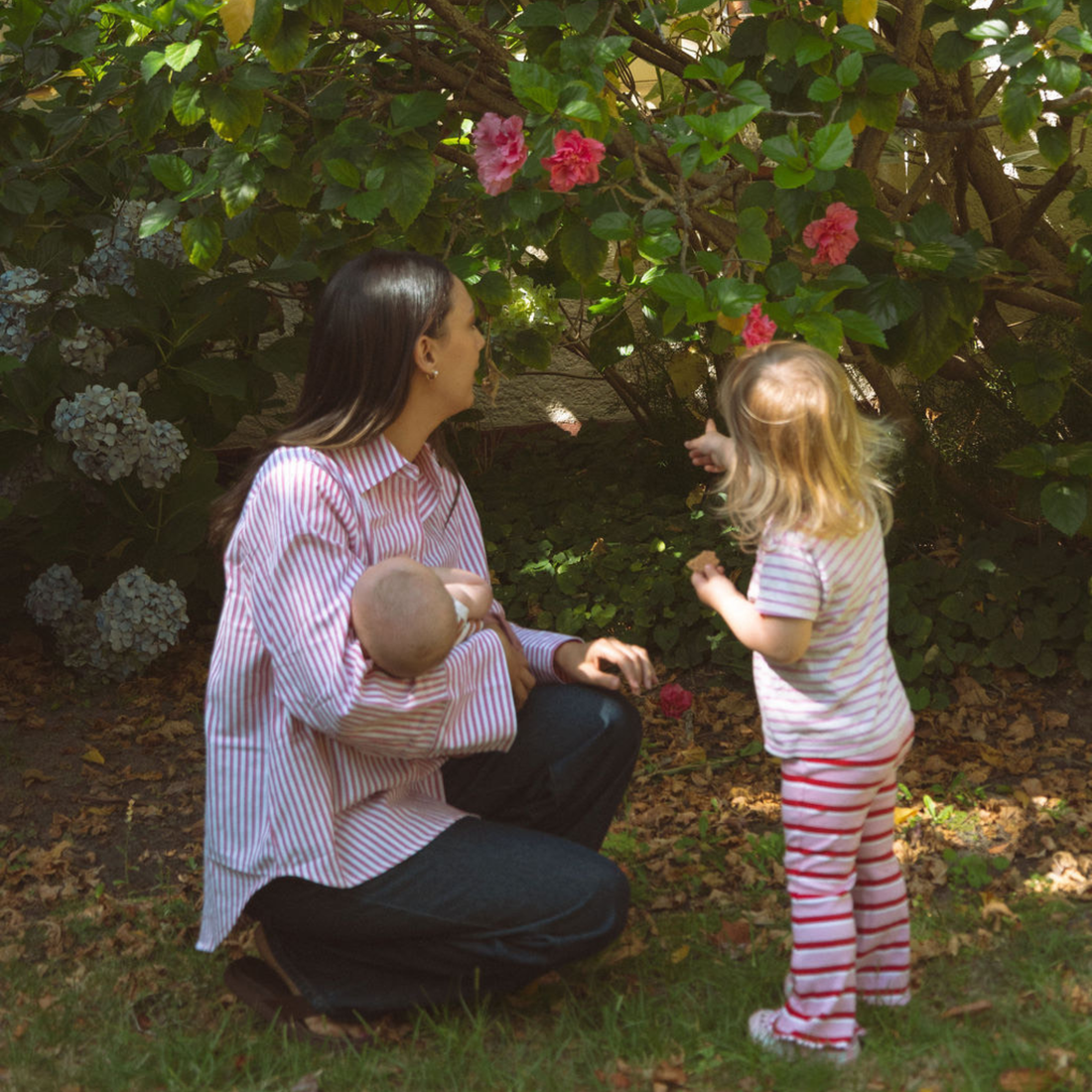


Before becoming a mother, I never knew it was possible to love someone so deeply. My children are everything to me. But I also didn’t know I could feel such intense anger. Admitting this, even now, is difficult. The truth is I’ve been struggling with postpartum rage since having my second child.
Postpartum rage is defined as intense, sudden feelings of anger, irritability or frustration that can arise in the weeks or months after childbirth. It is thought to affect about 1 in 3 women.
For me, it began after the newborn bubble lifted, my husband returned to work and the reality of parenting two kids under two sunk in.
In those early days, the bedtime routine was a real trigger. After a long day of parenting and the general chaos of dinnertime, I’d feel on edge about the upcoming task of getting both kids bathed and into bed, and about the prospect of yet another night of frequent wake ups and little sleep.
I’d have more patience for my baby, but if my toddler resisted sleep, I could feel my skin start to prickle and my blood start to boil. She was testing boundaries like any other two year old, but the shrieking, screeching and writhing around the mattress would absolutely send me. I’d alternate between bribing her to not wake her brother, hissing at her through the cot bars and, I’m ashamed to admit, yelling.
My husband would also cop it, whether it be through a nasty text message sent in the dark or me picking a fight as soon as my toddler was finally down. Looking back, I was overstimulated, overwhelmed and in desperate need of a break, but at the time it felt like the anger would come out of nowhere: irrational thoughts, followed by irrational and unwarranted outbursts, directed at the people I love the most. After the blowup, I’d feel immediate shame that I hadn’t been able to better regulate my emotions.
It took months of experiencing these spikes of rage, and the emotional comedown that followed, before I finally bit the bullet. With the encouragement of my husband, I decided to speak to someone. I wanted help, but I honestly wouldn’t have known where to start if I hadn’t met the perfect person at a park a year prior when our daughters started playing together on the swings.
Emily Hodges is a perinatal mental health nurse practitioner, and yes, I’d never heard of one either.
She’s become a major part of my village, and has really helped me work on not only my feelings of postpartum rage, but the shame that comes with it. As part of Emily’s “prescription”, I’ve started implementing a number of new habits that have already started to make a difference.
Below are five practices Emily recommends if you’re also experiencing these emotions.
Mindfulness breaks
At my first appointment Emily used an analogy about top tennis stars at the Australian Open. She described each player pushing themselves to their physical limits, while also prioritising short, frequent breaks. If elite tennis players at the top of their game give themselves permission to briefly tap out, why can’t we as mums?
Writing it out
When your emotions are threatening to bubble over, try releasing them through writing. “Jot down some feelings, like the things you are grateful for, and the things you’d like to change,” says Emily. Even writing out how you’d ideally like to respond to stressful situations in your Notes app can help·
Breathwork
The concept of breathwork initially sounded a little daunting to me - but I now understand it can be as simple as taking slow, intentional breaths in and out. There are also online and in-person classes that you can take to really work on this skill. “As mothers, we are biologically wired to look for danger - but so many of us stay in this state,” says Emily. “It’s difficult to access the calm and safety. Focusing on your breath is a powerful tool to signal to our body that we are safe”
Checking bloods
We all have a six week check up after having a baby but many of us mums drop off from regular health appointments after that. “We need to look at your iron and micronutrient levels to understand their influence on sleep and emotional regulation,” says Emily. “It’s important to explore practical, bite sized approaches and tools that speak to you and feel achievable”
Meditation
Emily is particularly a fan of a meditation technique called yoga nidra, which is practiced lying flat on your back. “Just as your nervous system learned to resort to rage under extreme stress, it can learn to find its way back to calm,” she says. “This neural retraining can happen through tiny, daily movements.”